

Six Slices Interview: Adam Evans, Head of Digital Marketing, Domestic & General
12 October 2026
Six questions. Six bite-sized answers. In this week’s interview, Domestic & General’s Head of Digital Marketing discusses how the inbox is losing value and why marketers should rethink offline channels, test new ones alongside proven tactics, and keep the customer at the centre.
Adam Evans: “When you strip everything back, marketing is just an interaction between your brand and the people you're trying to reach.”
What myth would you like to bust about marketing?
The idea that marketers aren't naturally “numbers people” and just focus on the fluffy stuff. If only it was that easy!
I think in reality marketers are incredibly data-driven. Few functions are scrutinized as closely as marketing when it comes to proving impact and justifying investment. The CFO is never far away from the conversation.
I often attend industry events and if you put a load of marketers in a room talking about their campaigns, the conversation doesn’t begin and end with how good the creative looks. It's usually; "How much did you spend? What did it deliver? How did you measure it?” - that’s what marketers have to know to prove the worth of each investment.
Other than your own, which brand do you most admire and why?
I like brands that drive positive change alongside commercial success.
I loved the Trainline “I came by train” campaign – getting people to rethink travel as a personal stand on carbon emissions rather than just a method of getting from A to B in the quickest or cheapest way possible.
Tony's Chocolonely is another good example. They've built a successful challenger brand whilst being transparent about issues in their supply chain and openly talking about problems many businesses would rather avoid. They've shown that raising industry standards and building a strong commercial brand aren't mutually exclusive.
In order to lead a great team, what one thing should any aspiring leader not ignore?
Making space for development alongside the core job description.
It's easy to focus solely on day-to-day performance: delivering projects, hitting targets, and managing workloads but alongside this it’s useful to encourage people to look beyond their immediate role and understand how other teams operate.
Not only does this create more rounded profiles and unlock new progression opportunities, but that broader understanding also breaks down silos and improves collaboration with colleagues. The danger of having a team that just stays in their lane is it really limits their growth potential and also limits value they can add to the wider business.
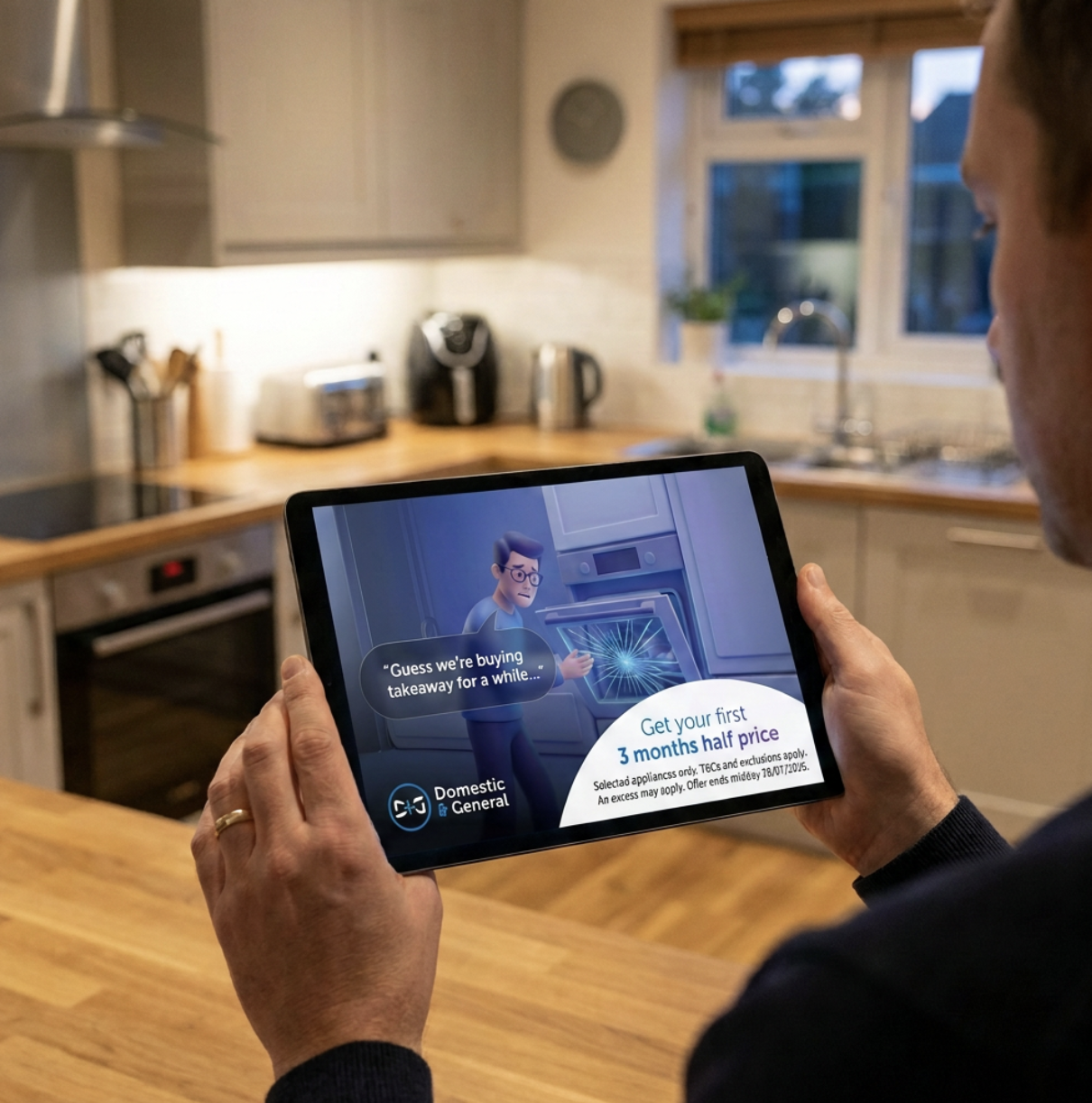 D&G’s recent “Oh No!” moments” campaign
Where does your best thinking happen – and why?
Usually away from my desk.
Whether I'm at home or in the office, my best thinking tends to happen when I've stepped away from the immediate situation I'm trying to affect. I usually walk our Labrador first thing in the morning and find that this is a good time to think about the day ahead. There's something about being outdoors that creates the headspace needed for more objective thinking.
At work, I try to structure my day so that focus and thinking time happens in the morning, when I'm naturally at my sharpest. That said, I wouldn't go as far as calling myself a morning person—not until I've had a cup of tea anyway.
In marketing, what have you changed your mind about?
The value of offline, particularly mailers.
A lot of digital media spaces are saturated. Take email for example – we're battling inbox overcrowding, email deliverability challenges, and promotions-tab filtering, so a customer’s doormat is valuable real estate. There's often far less competition for attention there than in a customer's inbox.
More broadly, I’ve always gravitated towards legacy brands that are in the process of modernizing their marketing, and I’ve seen a trend that often change can be too drastic. For example, media plans that focus too heavily on the shiny new thing and the expense of what’s proven to work – an either/or approach – rather than weaving new channels into an established marketing mix.
I always advocate for testing new channels alongside established ones – we just launched ChatGPT ads as one of the first UK advertisers on day 1 for example – but innovation needs to complement what is tried and tested rather than necessarily replacing it.
Which marketing rule still holds, no matter what?
Understand the customer.
Marketing trends will come and go – particularly at the moment with AI changing our industry at such a pace - but this principle doesn't change. When you strip everything back, marketing is just an interaction between your brand and the people you're trying to reach. If you don't truly understand them —their motivations, challenges and priorities—it's very easy to end up communicating what the business wants to say rather than what the customer actually needs to hear.
Adam leads global digital marketing at Domestic & General – a leading insurance and appliance care provider with over 7 million customers.
Adam has 15 years’ experience integrating performance marketing with brand and creative strategy, with a background at established heritage brands across financial services, publishing and pharmaceuticals.
Tim Healey listens, learns, and synthesises real-world best practices from hundreds of marketing professionals and presents them in these weekly interviews for MAD//Fest. Tim’s Little Grey Cells Club is a trusted, no-sales, peer-driven network where senior-level marketing directors unite to confront challenges, and drive leadership forward.


