
The Blank Shirt: When Football’s Biggest Asset Loses Its Value
12 October 2026
The Premier League’s blank shirts reveal an uncomfortable truth: shirt sponsorship may be worth far less than the industry thinks. Global Brand Director for Rexona, Emily Heath, argues why the old model is breaking down and how brands can turn a logo on a shirt into a powerful platform for growth.
Every season, the Premier League makes the same promise to the world. The biggest clubs. The brightest stars. The most commercially sophisticated football ecosystem on the planet. And at the start of every season, a handful of clubs walk out for their opening fixture wearing something that quietly contradicts all of it.
A blank shirt.
No sponsor. No name across the chest. Just a badge, a kit manufacturer, and a question the industry would rather not answer too loudly. Because the blank shirt isn't a quirk or an administrative oversight. It's a symptom. And right now, it's the most honest signal in sports marketing.
So if you're a brand sitting across the table from a rights holder asking you to put your name on a shirt, this is what you need to understand.
The Gambling Premium Was Hiding Something
For the better part of a decade, gambling brands were the Premier League's most generous shirt sponsors, paying significantly above market rate, driven by acquisition economics and a commercial model that could justify almost any fee if the conversion numbers stacked up.
What that created, quietly and without anyone acknowledging it, was an artificially elevated benchmark for shirt value across the entire league. Clubs priced against the ceiling a gambling brand could reach. Agencies negotiated against it. The whole market calibrated upward to a premium specific to one category — and one category only.
Then the ban arrived. And the ceiling came with it.The biggest clubs were largely insulated, their shirts were already built on global reach, activation platforms and cultural credibility that compounds far beyond 90 minutes on a pitch. For clubs below that tier, the departure of gambling money revealed something uncomfortable: the brands willing to pay genuine market rate for a mid-table Premier League shirt are fewer than the industry had assumed. And the rate they'll pay is considerably lower than the gambling era suggested.
The blank shirt isn't commercial failure. It's the market correcting itself after a decade of artificial inflation and the correction is telling us something important about what the asset was actually worth all along.
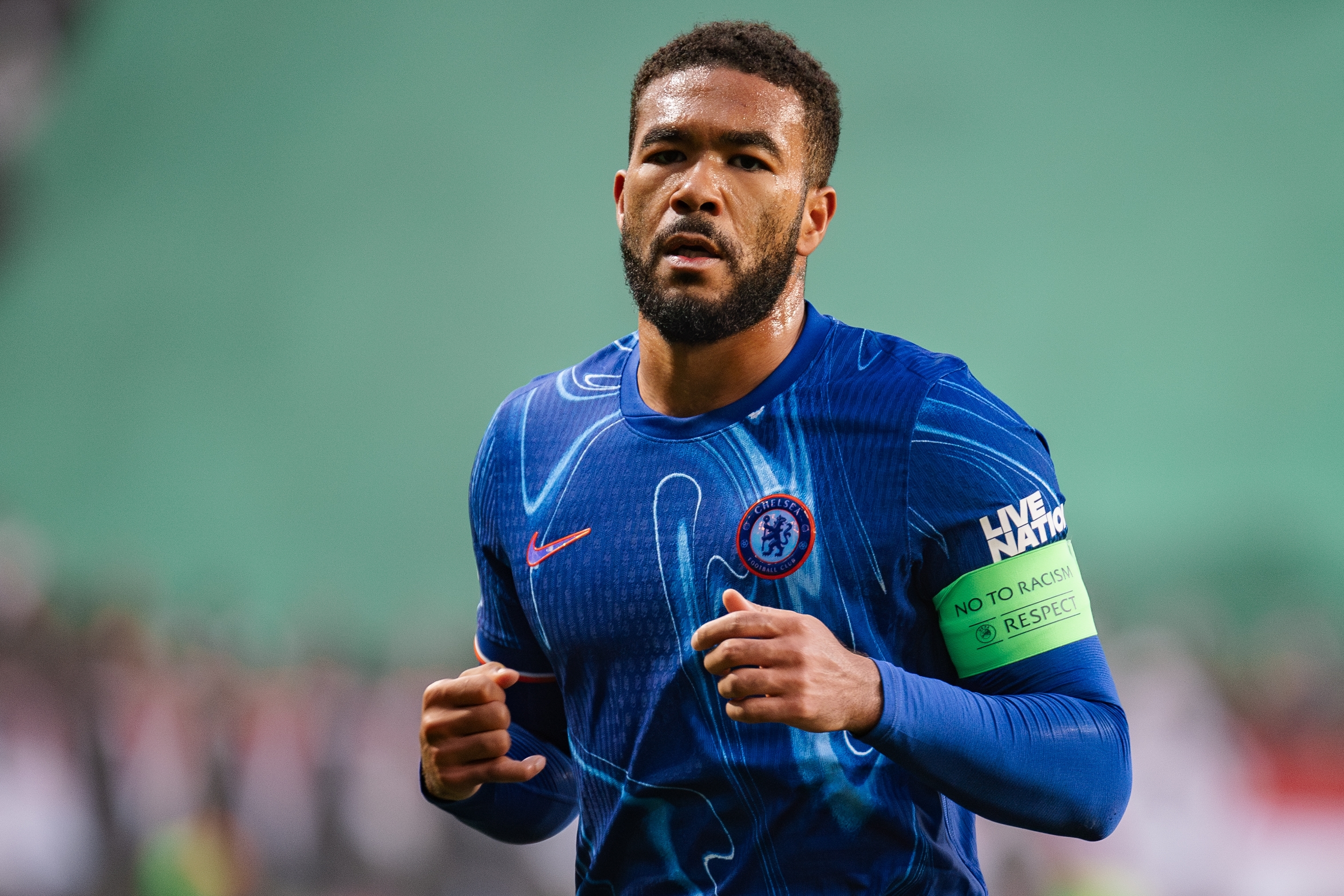 Reece James and Chelsea have recently been sponsorless
The Shirt Is A Volatile Asset Being Sold As A Stable One
Here's the tension nobody states plainly: the value of the asset changes every three months, but the deal runs for three to five years. A shirt on a title-challenging club carries materially different commercial weight to the same shirt on a relegation battle. Broadcast exposure, cultural conversation, global audience engagement — all hostage to results, form, injury and decisions no commercial team controls. And yet shirts are sold and bought as though they're stable, predictable media assets with guaranteed return.
Behavioural science tells us the vast majority of consumer decision-making is instinctive — built through emotional associations accumulated over time. A logo seen passively across a broadcast, without story, without culturally resonant moments, without activation that creates genuine memory structures, isn't building those associations. It's wallpaper. And wallpaper doesn't shift brand health metrics. It never did.
The shirt was always an entry point. The industry just forgot to tell everyone that the real work started after the signing.
The Budget Squeeze Nobody Is Talking About Honestly
There is a third force bearing down on the shirt deal — quieter than the gambling ban, less visible than the activation gap, but arguably more damaging long-term.
Brands are running out of runway.
Marketing budgets across virtually every major category have tightened. Economic pressure, rising operational costs and the relentless short-termism of quarterly earnings cycles have produced a CMO environment where every pound must demonstrate return — measurable, attributable, defensible-in-a-board-meeting return — faster than ever before.
And shirt sponsorship, almost by definition, doesn't work on that timeline.
The brand equity a shirt deal builds is real. The long-term association between a brand and a club, sustained over years and activated intelligently, creates the kind of instinctive consumer preference no performance marketing campaign can replicate at scale. But it builds slowly. It compounds quietly. It shows up in brand tracking and market share movements that take years to attribute cleanly to a single investment.
What's happening in practice is that brands are being pulled in two directions simultaneously. The commercial team understands the long-term strategic value. The finance team is asking why the same budget can't be deployed in paid search or retail media where attribution is immediate and clean. Both arguments are right — which is precisely what makes it so difficult.
The brands walking away from shirt deals are often not doing so because the asset isn't valuable. They're doing so because they cannot make the internal case for long-term brand investment when the business needs revenue this quarter. And until that internal tension is resolved, no rights fee, no matter how fairly priced, will feel justifiable.
So Why Sign At All?
Because when it works, nothing works like it. But it only works as a platform — not a placement.
No partnership illustrates this more precisely than Standard Chartered's 17 years on the front of Liverpool's shirt — the longest-running front-of-shirt deal in Premier League history — which evolves into a Global Partner chapter from 2027/28. Not an exit. An evolution. And that distinction matters enormously.
Standard Chartered didn't buy a logo. They built a global platform that happened to include one. Their Play On campaign tackled the dropout of girls from sport across 12 markets, reaching over 10,000 girls in Africa alone — using the Liverpool shirt as the launchpad for a story about gender equality that transcended football entirely. Their Invest Like Champions campaign mapped Liverpool players' roles on the pitch to investment strategies, turning a football sponsorship into a B2B financial services platform across 12 global markets simultaneously. Summer tour activations became premium client relationship events. The shirt became infrastructure for conversations no traditional media spend could replicate.
After 17 years they aren't leaving. They're evolving — because they built genuine roots inside the partnership by asking one question before a single contract was signed.
What moment in this partnership is genuinely, undeniably ours?
Not where can we appear? But where do we actually belong?
Those are two profoundly different briefs — and the distance between them is where most shirt sponsorship money quietly disappears.
The Shirt Still Works. Here's How To Make It.
The blank shirts of August 2026 aren't an argument against shirt sponsorship. They're an argument for doing it properly — and the brands that do are still building some of the most powerful commercial platforms in sport. If you're a brand owner weighing the decision, here is what the evidence says.
Know what you're actually buying. The listed price of a shirt reflects the market's history, not necessarily its future. Understand what category of brand set that benchmark and whether your business model justifies the same logic. A shirt deal priced for a gambling brand's acquisition economics is a different asset entirely to one priced for a consumer goods company building awareness over a decade.
Model the downside, not just the dream. Evaluate the shirt at tenth place, not at the title. The asset is volatile in ways the brochure won't tell you. Build performance contingencies into your planning and allocate activation budget proportionate to the rights fee — because the rights fee is the entry point, not the investment.
Resolve the internal tension before you enter the room. Are you a brand building long-term equity or a business under short-term sales pressure? If the honest answer is the latter, a shirt deal will disappoint — not because it failed, but because you were measuring a marathon with a stopwatch. The shirt rewards patience. Arrive knowing whether you have it.
Answer the only question that matters before anything else. What moment in this partnership is genuinely, undeniably yours? Not where can you appear — but where do you actually belong? Build the entire activation architecture around that answer from day one, not after the contract is signed and the creative brief lands on an agency's desk.
The shirt is one of sport's most extraordinary commercial canvases. Standard Chartered proved that 17 years of purposeful, story-driven activation can turn a logo into a global platform. The opportunity hasn't gone any where.
The blank shirt isn't a eulogy for shirt sponsorship.
It's an invitation to do it better.


