

The most powerful thing a brand can do? Be unmistakably itself
9 November 2026
Dove’s latest launch proves the power of distinctive brand assets. Sometimes, the smartest innovation is simply being unmistakably you, argues Brand & Sports Marketing Consultant + Writer, Emily Heath.
In an industry obsessed with what’s new, sometimes the most powerful creative idea is the one you’ve been building for decades.
No reinvention. No radical new identity. No desperate attempt to chase the latest cultural trend.
Just a brand being brilliantly, unmistakably itself.
And Dove’s latest launch might be one of the simplest, yet smartest, examples of this we’ve seen in a while.
Nearly 70 years after introducing its iconic Beauty Bar, Dove has launched its first fine fragrance. Not a completely new scent, but the one millions of consumers already know. The familiar, comforting fragrance that’s been part of bathrooms, routines and memories for generations.
The bottle mirrors the distinctive curves of the Beauty Bar, crowned with a sculptural gold version of the iconic Dove bird. Even the $19.57 price tag celebrates the year the original bar launched.
It’s a beautifully considered piece of brand storytelling. But more importantly, it’s a masterclass in the power of distinctive brand assets.
And a reminder that the strongest brands don’t need to keep reinventing themselves to remain relevant.
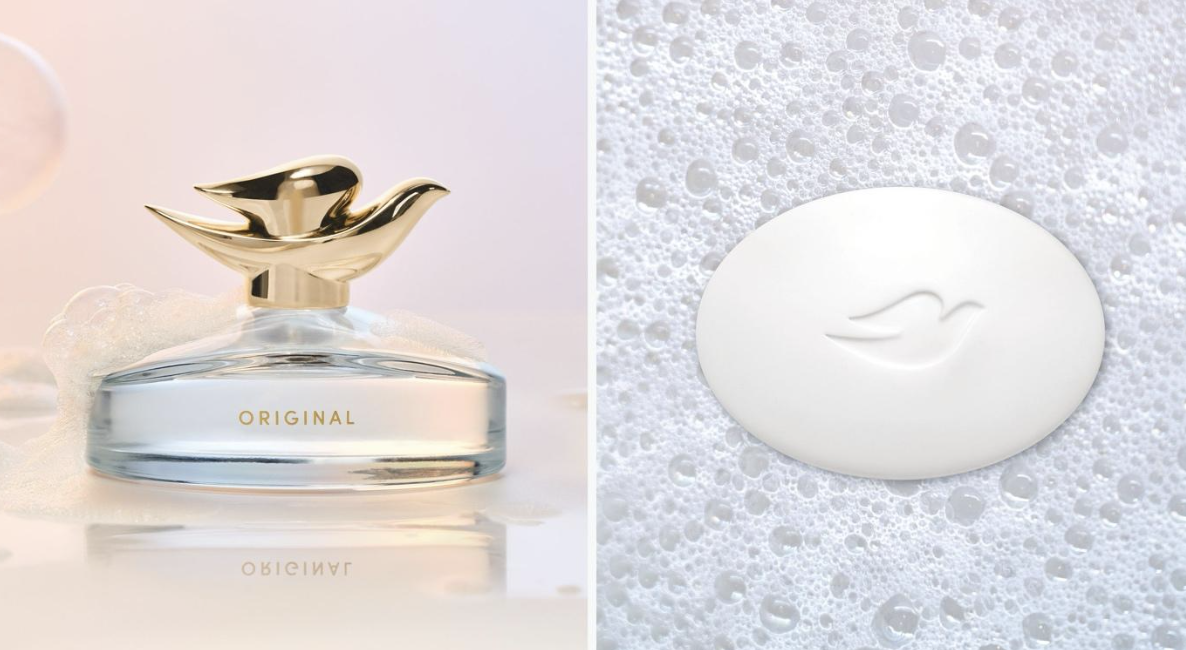 Image from brand
The extraordinary power of being recognisable
We talk a lot about creativity in marketing. About disruption, innovation, cultural relevance and standing out.
But perhaps we don’t talk enough about the importance of being remembered.
Distinctive brand assets, or DBAs, are the recognisable elements that make a brand instantly identifiable. Colours, shapes, symbols, sounds, characters, typography and, in Dove’s case, even scent.
Individually, they might seem relatively ordinary. But consistently reinforced over time, they become extraordinary commercial assets.
They build memory structures. Mental shortcuts that allow consumers to connect what they see, hear or smell with a specific brand, often without consciously thinking about it.
Think Coca-Cola’s unmistakable red, its iconic glass contour bottle or Christmas jingle, “Holidays are coming”. Heinz’s keystone label and familiar ketchup bottle. Disney’s castle, characters and instantly recognisable opening sequences.
These brands have spent decades obsessing and investing in their identities, building recognition through consistency and repetition.
So when they launch something new, they aren’t starting from scratch. They’re drawing on years of accumulated familiarity.
That’s what makes their best creative work appear almost effortless.
The creative idea might be new. But the recognition has already been earned.
Dove hasn’t just bottled a fragrance. It’s bottled decades of memory.
What makes Dove’s latest launch so compelling is that its most powerful asset isn’t necessarily something you can see.
It’s something you can smell.
Scent has an extraordinary ability to evoke memory and emotion. And for generations, Dove’s Original Beauty Bar has occupied a small but meaningful place in people’s everyday lives.
That familiarity is incredibly valuable.
Rather than inventing an entirely new fragrance proposition, Dove has taken an existing sensory asset and elevated it into something desirable, collectable and culturally relevant.
And it has done so with remarkable discipline.
The fragrance itself carries the familiarity. The curved bottle reinforces the product heritage. The gold bird transforms a long-standing brand symbol into a premium design feature. The price anchors the entire idea in the brand’s history.
Every detail works harder because every detail works together. And it feels special.
It’s also a response to something consumers have reportedly been asking for over years: the chance to wear the scent they already love.
That’s the beauty of the idea. Dove hasn’t needed to manufacture a new emotional connection. It’s found a new way to celebrate one that already exists.
Of course, the commercial impact of this limited-edition launch remains to be seen. But as an expression of brand-building, its strength is immediately apparent.
Consistency isn’t the enemy of creativity. It’s what makes creativity work harder.
I’ve been fortunate to work with some extraordinary marketers over my career, and one of the things I’ve learned most from them is that protecting a brand’s identity takes far more discipline than people realise.
Particularly when you’re working with global brands, across multiple markets, agencies, teams and creative ambitions.
There’s always a temptation to change something. Refresh the logo. Introduce a new colour palette. Develop a new visual language. Make the brand feel more contemporary.
And sometimes change is absolutely necessary.
But too often, we mistake change for progress and forget the ask we place on consumers to alter unconscious memory structures we’ve already put in place.
Dove has had some of the world’s most accomplished marketers shaping its identity, and it’s almost militant commitment to protecting its distinctive assets has been a defining strength.
That doesn’t mean the brand has stood still.
Far from it. Dove has evolved its portfolio, challenged beauty conventions and built some of the industry’s most celebrated creative platforms.
But through that evolution, it has maintained a recognisable brand identity.
The lesson isn’t that brands should stop innovating. It’s that innovation becomes significantly more powerful when it builds on what consumers already know.
Consistency creates the foundations. Creativity gives those foundations new meaning.
And when the two work together, the result can be incredibly powerful.
So what should marketers take away?
Dove’s launch offers a few lessons worth considering, regardless of category, budget or brand maturity.
1. Know what makes your brand unmistakable.
Not what your internal brand guidelines say is distinctive, but what consumers genuinely recognise and associate with you. Understand which assets are strongest, and where you still need to build recognition.
2. Protect those assets relentlessly.
Consistency requires conviction. Particularly when new teams, agencies or leadership arrive with fresh creative ambitions. Evolution should strengthen your memory structures, not continually reset them.
3. Think beyond the visual.
Some of the most powerful brand assets aren’t logos or colours. They’re sounds, shapes, textures, rituals and scents. Consider the full sensory experience of your brand and where untapped opportunities might exist.
4. Find new ways to make familiar assets culturally relevant.
Distinctiveness doesn’t mean doing the same campaign forever. It means using recognisable foundations to create fresh experiences, products and conversations that feel inherently yours.
And perhaps most importantly, measure what people remember, not just what they notice.
Because attention without attribution is a missed opportunity.
The real superpower of great brands
There’s something wonderfully refreshing about Dove’s latest launch.
In a marketing landscape that can sometimes feel addicted to novelty, it’s a celebration of something much harder to achieve: enduring recognition.
A familiar scent. A distinctive shape. An iconic bird. Nearly seven decades of brand-building, brought together in one beautifully simple idea.
And perhaps that’s the ultimate lesson.
The most powerful creative ideas don’t always require brands to become something new.
Sometimes, they simply require brands to recognise the extraordinary value of what they’ve already built.
Because being different might get you noticed. But being distinctive gets you remembered.


