
Convenience Store Digital Screen Media:
The New Engine of Reach and Relevance in UK Advertising

Executive Summary
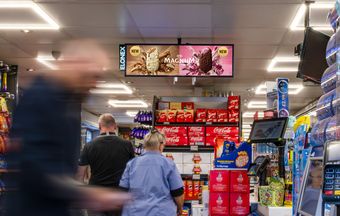
The UK advertising landscape is undergoing a structural shift. Retail media has emerged as the fastest growing channel, driven by the convergence of digital capability, shopper data, and proximity to purchase. Within this transformation, convenience store digital screen media has become a uniquely powerful environment. One that delivers broad national reach and hyperlocal relevance simultaneously.
This whitepaper outlines why convenience store digital screens are becoming a core component of modern media plans, how they outperform traditional instore formats, and why both endemic and nonendemic brands are accelerating investment.
Retail media has moved from a niche activation channel to a mainstream investment priority. Brands are reallocating budgets from social, programmatic, and traditional OOH into retailer owned, data rich environments.
Three forces underpin this shift:
- Audience fragmentation has reduced the efficiency of mass media.
- Retailer first party data has become a strategic asset.
- Proximity to purchase has proven to be one of the strongest drivers of conversion.
Convenience stores sit at the intersection of all three.
Convenience stores reach 76% of UK adults weekly, with shoppers visiting 2–4 times per week. No other physical retail channel delivers this combination of frequency, proximity, and mission intensity.
Convenience missions are short, urgent, and often unplanned. This creates a high value environment for influence:
- Immediate consumption
- Top up shopping
- Food to go
- Snacking and soft drinks
- Alcohol and evening missions
These missions are inherently responsive to in the moment messaging, making convenience stores a natural home for digital out of home media.
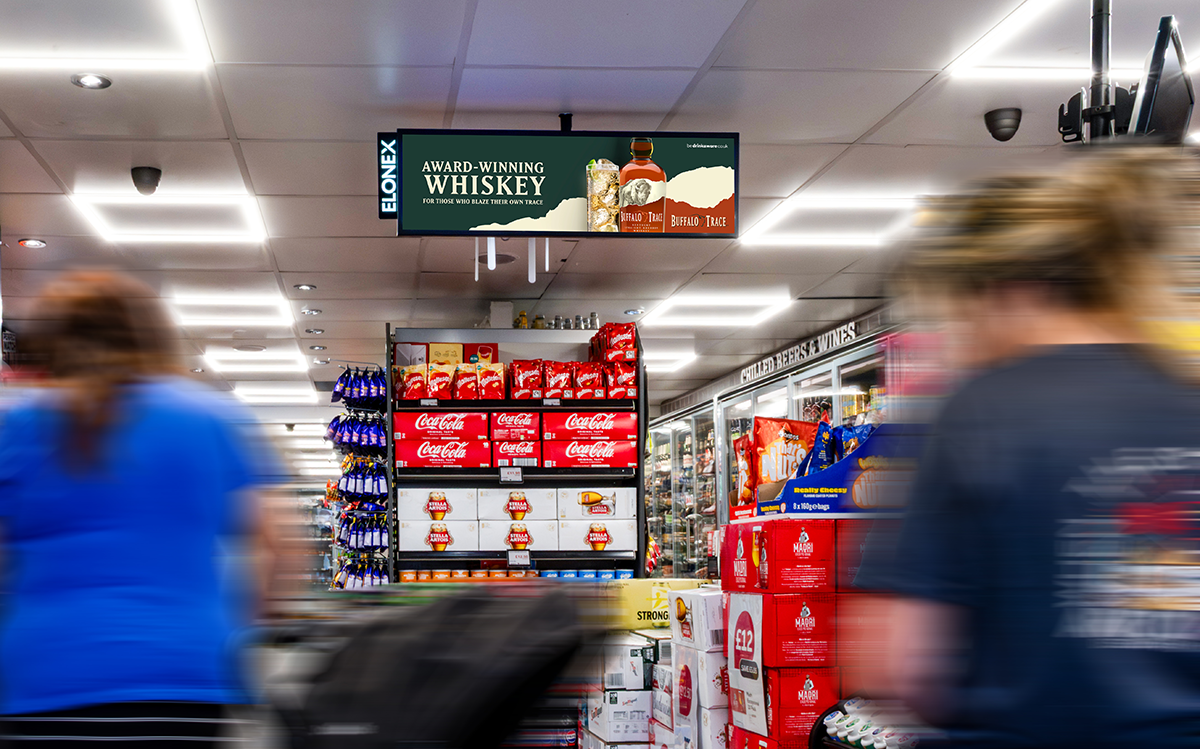
Convenience stores contain builtin attention hotspots:
- Store entrance
- Queue areas
- Chiller doors
- Foodtogo counters
- Aisle ends
These are moments where shoppers are captive, focused, and seconds away from a decision. Digital screens placed in these zones deliver attention levels that traditional OOH cannot match.
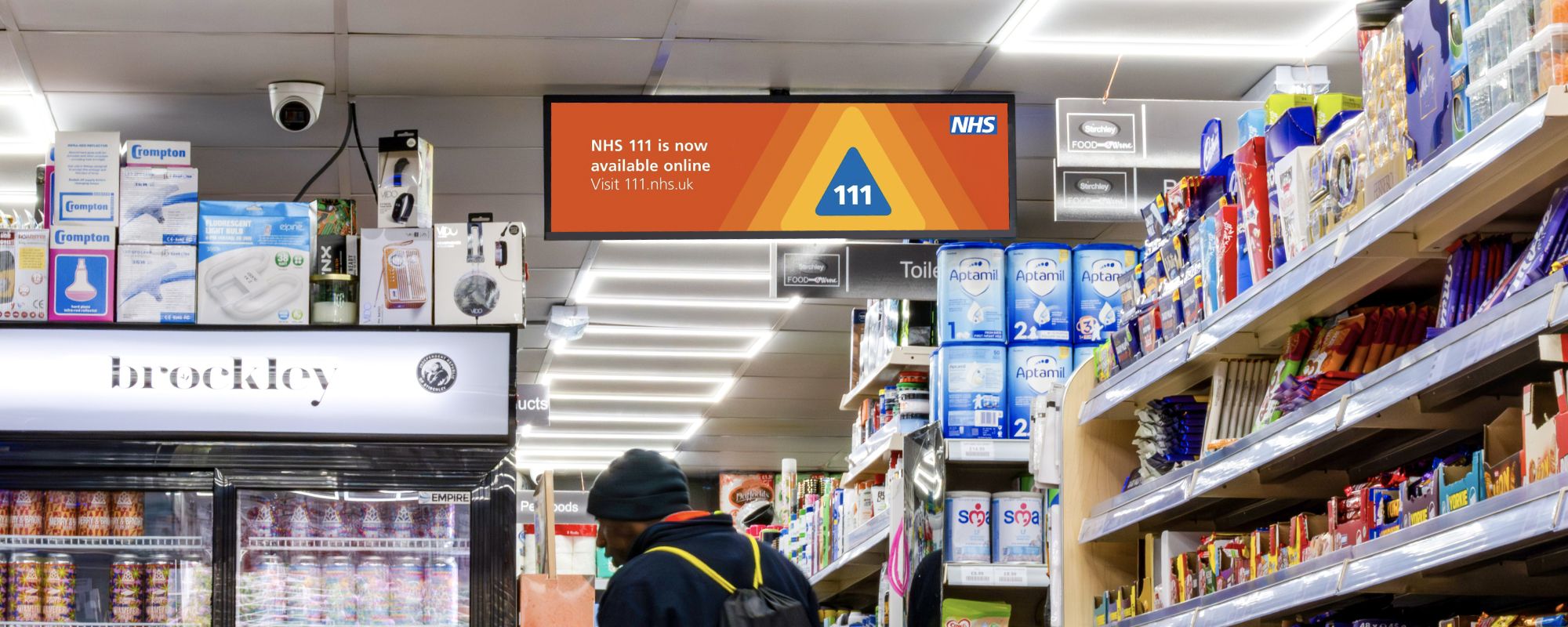
Digital screens in convenience stores combine two historically opposing strengths:
1. Reach
- National footprint across symbol groups, forecourts, and major convenience retailers
- High weekly penetration
- Indoor DOOH that complements roadside OOH
- Scalable, repeatable impressions across thousands of stores
2. Relevance
- Hyperlocal targeting
- Day parting (morning coffee, lunchtime, evening missions)
- Contextual triggers (weather, events, promotions)
- Retailer data driven optimisation
This dual capability — mass reach + contextual relevance is what makes convenience DOOH uniquely effective.
Endemic brands (FMCG, snacking, soft drinks, alcohol, food to go) invest because convenience is where:
- Impulse decisions happen
- Promotions drive immediate uplift
- New product launches succeed or fail
- Category share is won or lost
Digital screens amplify these moments with dynamic, high attention creative that can be updated instantly.
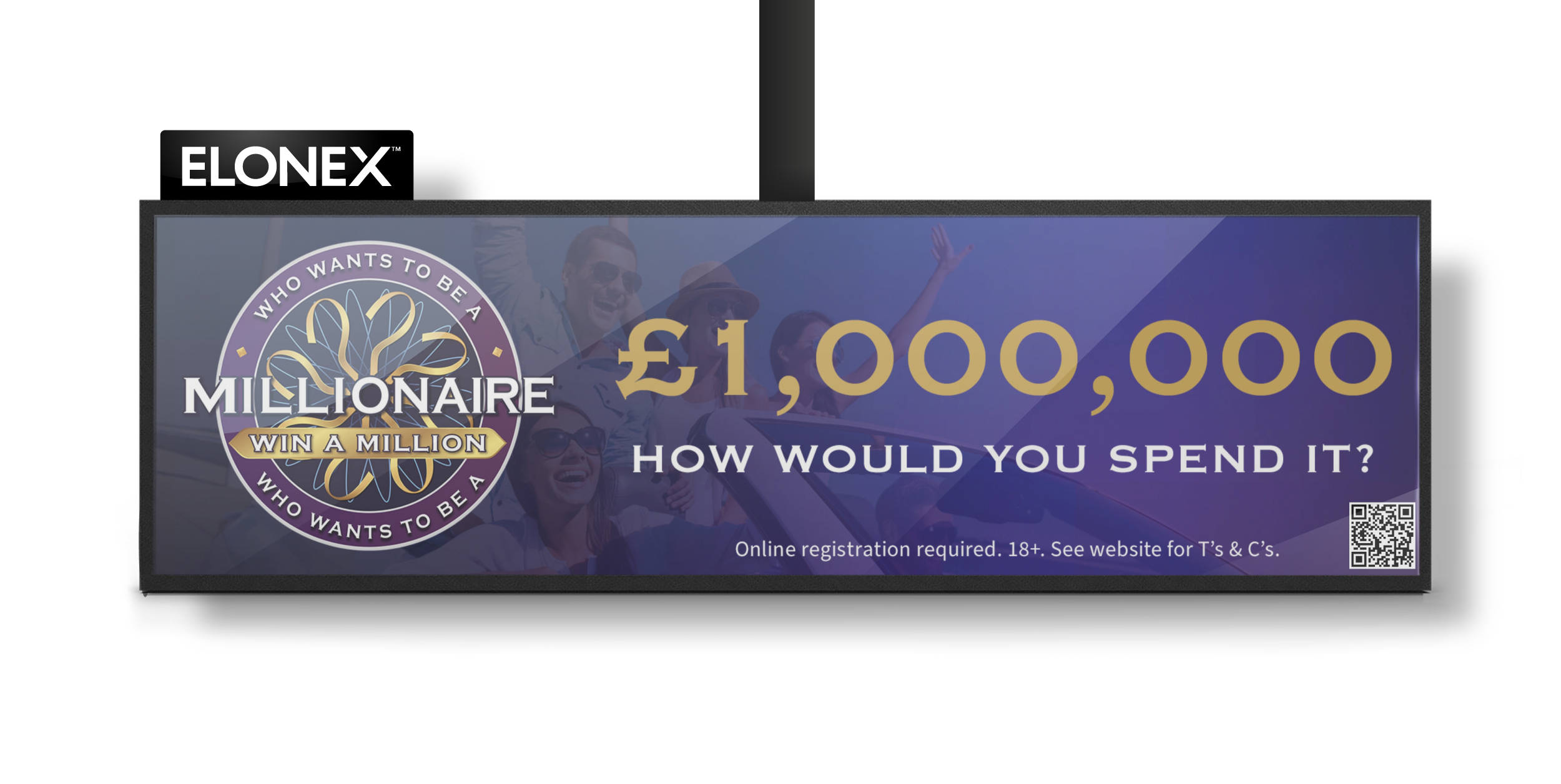
Nonendemic brands (finance, telco, entertainment, QSR, delivery apps, service providers) increasingly use convenience store DOOH for:
- Mass reach
- Localised messaging
- High dwell time
- Premium indoor visibility
- Proximity to key life moments (commuting, lunch, evenings)
For these advertisers, convenience DOOH functions as local broadcast at national scale.
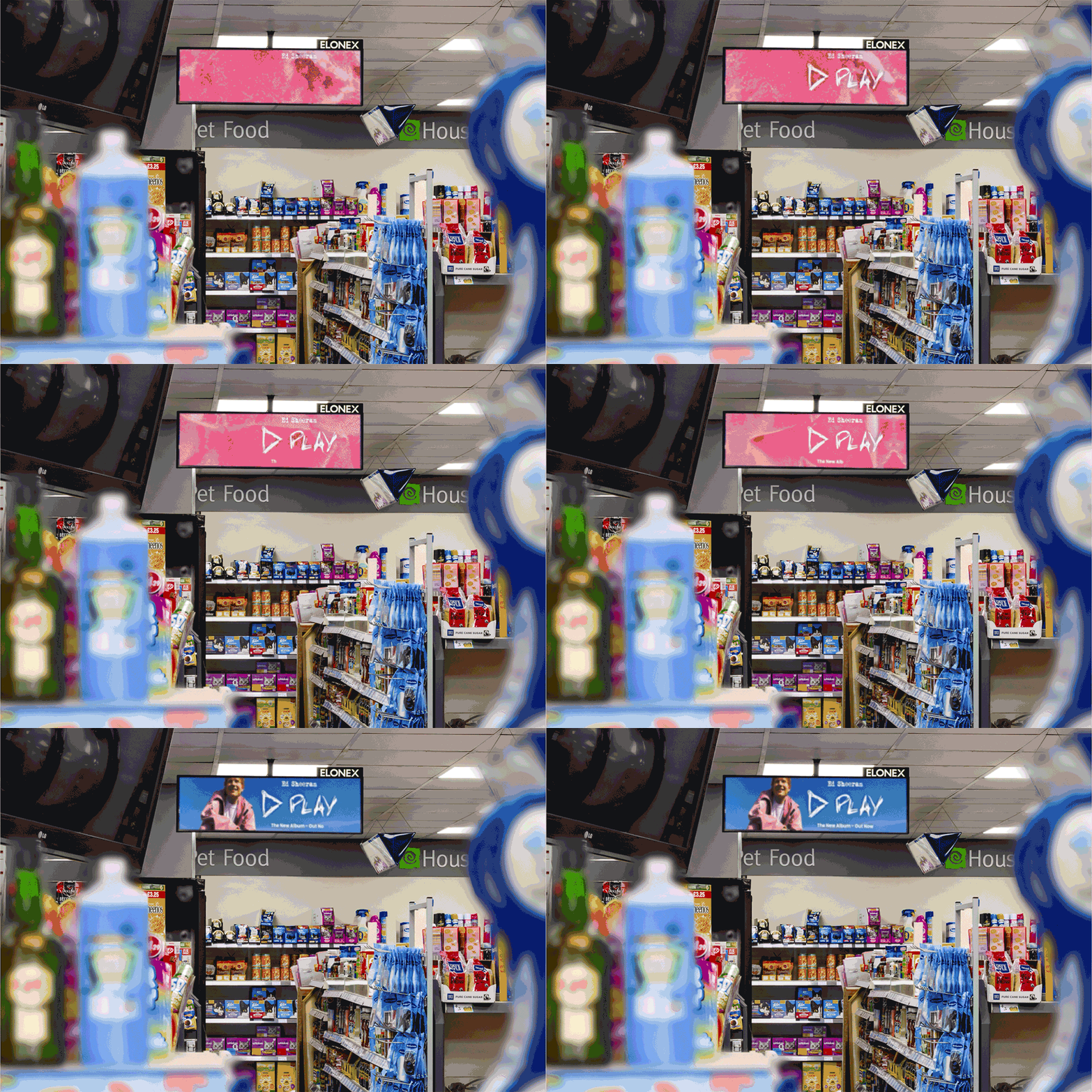
While traditional in-store formats (FSDUs, barkers, wobblers, sampling) remain valuable, digital screens outperform them in:
- Attention
- Flexibility
- Measurement
- Speed to market
- Creative dynamism
Advertiser breadth
Other formats excel at physical disruption and price communication, but screens are becoming the anchor format for modern in c-store media.
Retail media networks now link:
- Screen exposure
- Loyalty card data
- SKU level sales
- Store level uplift
This transforms convenience store DOOH from a broadcast medium into a measurable performance channel.
Digital screens in convenience stores are forecast to grow from £50–£70m today to £80–£110m within three years.
Other in-store formats will grow modestly, but screens will become the majority of in-store media spend by 2028.
For endemic brands:
Digital screens are now essential for:
- NPD launches
- Promotional amplification
- Category defence
- Seasonal activation
For non-endemic brands:
Convenience DOOH offers:
- Mass reach
- Local relevance
- High-attention indoor environments
- Incremental reach beyond roadside OOH
For retailers:
Digital screens unlock:
- High margin revenue
- Reduced print costs
- Dynamic merchandising
- Enhanced shopper experience
Three forces make this the moment for investment:
- Retailers need new revenue streams
- Brands need measurable, high attention environments
- Technology has made screens scalable and affordable
Convenience stores are becoming the new front line of influence.
Conveniencestore digital screen media is the rare channel that delivers:
- National scale
- Local precision
- High attention
- Real world proximity
- Retailer data attribution
As retail media continues to expand, convenience store DOOH will become a foundational component of modern media planning, not a niche activation, but a core reach and relevance engine for brands across categories.
Join Our Mailing List
Speaker updates, ticket giveaways and exciting opportunities - don’t miss a thing and be the first to know about what’s happening at MAD//Fest


