

The World Cup audience is not who you think it is
14 June 2026
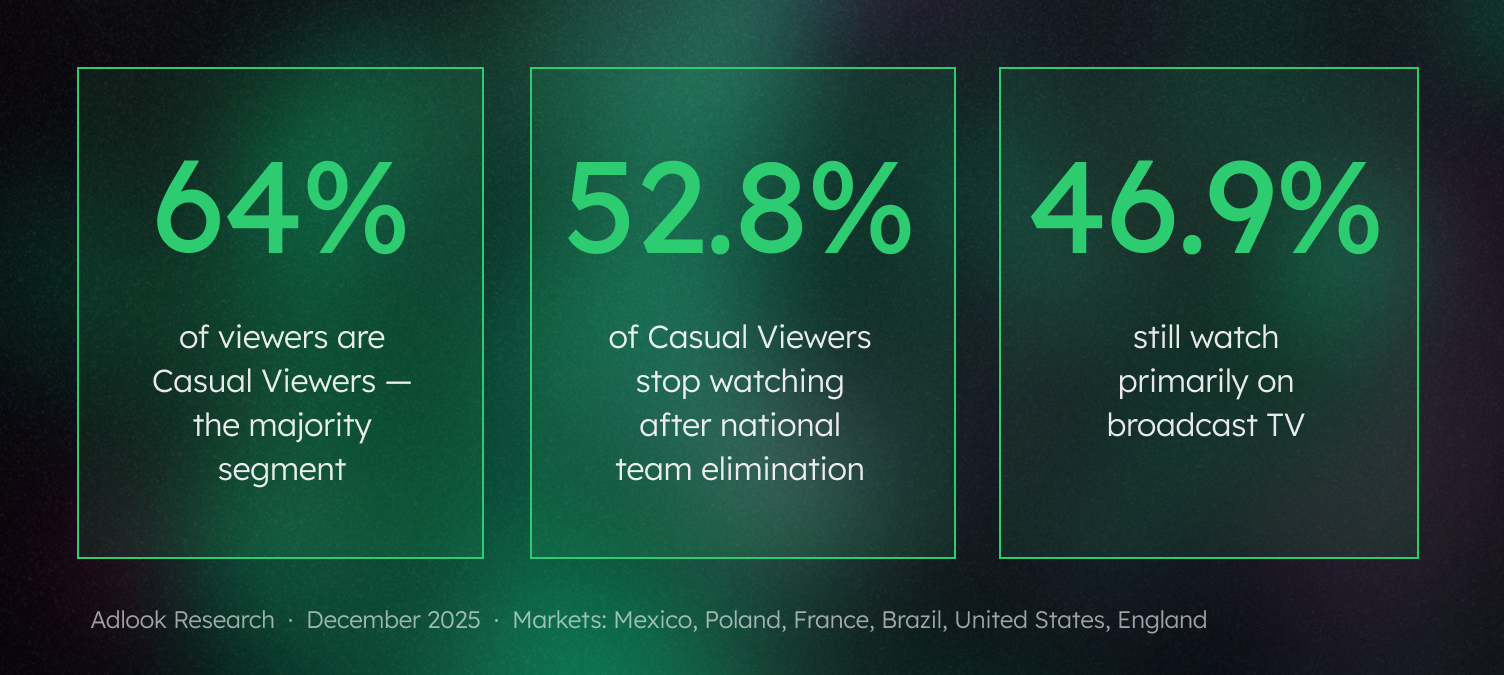
64% of World Cup viewers will stop watching the moment their national team is out. Adlook's research across six markets reveals why the tournament audience is more fragile than most brands assume, and what to do about it.
Most brands plan World Cup campaigns as if the audience is consistent from kick-off to the final. New research from Adlook, covering six markets, shows the reality is more complicated, and the implications for media planning are significant.
The key findings
The tournament audience splits into two groups with very different behaviours.
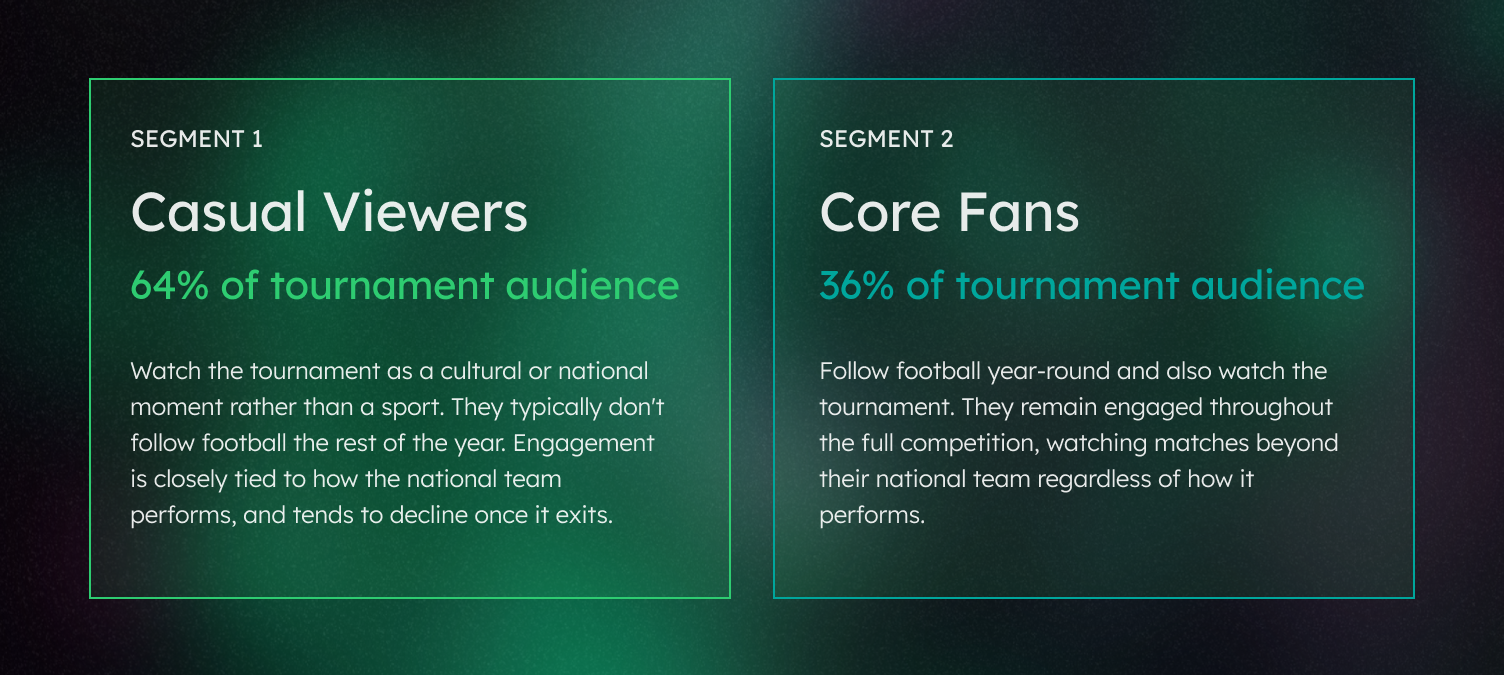
Casual Viewers (64% of the audience) watch the World Cup as a cultural event, not as football fans. Once their national team is eliminated, 52.8% stop watching entirely.
Core Fans (36% of the audience) follow football year-round and stay engaged throughout. 69.7% continue watching regardless of national team results.
This means the audience is at its largest and most diverse in the group stages, then shrinks and changes character fast. By the quarter-finals, you are reaching a very different crowd than you were in week one.
Where and how people watch
Despite the continued growth of streaming, broadcast TV remains the primary viewing platform. 46.9% of viewers watch primarily on traditional television, 20% via streaming on Smart TV, 12.2% at public venues such as bars and restaurants, and 11% on smartphones or tablets.
Core Fans over-index on digital: 38% watch via streaming or digital platforms. Casual Viewers lean toward broadcast, and are 8% more likely to report giving the match their full, undivided attention, suggesting that for the majority segment, the broadcast w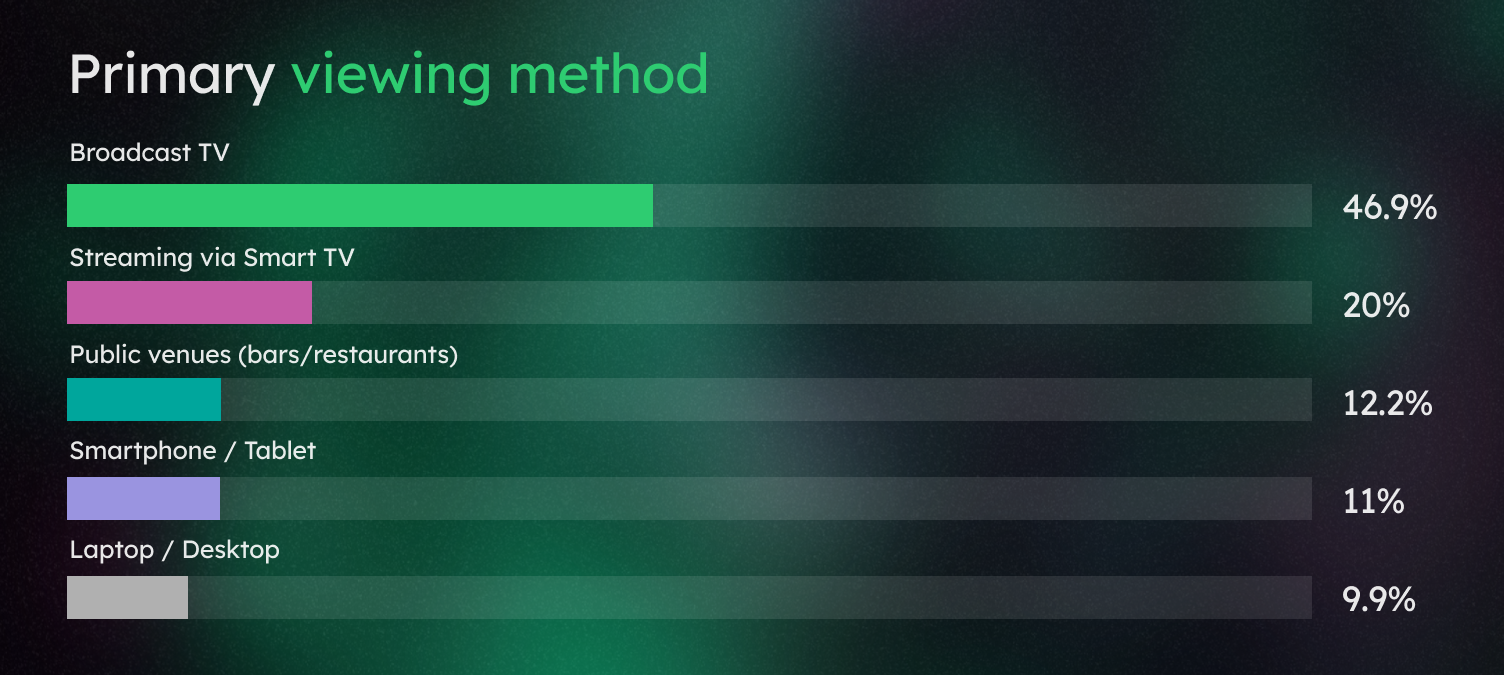
What it means for campaign planning - 3 things to do differently
- First, front-load media weight. The group stage is when the audience is largest and most diverse. Holding back budget for later rounds means targeting a smaller, more concentrated audience at a higher cost.
- Second, plan for audience composition to shift, not just size to decline. As the tournament progresses, the remaining audience skews increasingly toward Core Fans: less commercially reactive, more focused on the sport itself. Creative and targeting strategies built for a casual cultural audience in week one will need to evolve.
- Third, connect broadcast with second-screen environments. Cross-screen strategies that link TV exposure with concurrent digital touchpoints are likely to outperform broadcast-only approaches, particularly for reaching Casual Viewers while they are active on their phones during the match.
Download the full Adlook report HERE


