
Industry barometers and trend predictions are a familiar feature in January and usually provide a predictable pulse-check on budgets, brand and behaviour. However, nothing about the year ahead seems predictable right now.
Marketing feels like it’s at a tipping point as the rapid expansion of AI threatens to upend every part of what we do. Add to this an increasingly volatile global environment, with potential conflict and tariffs dominating the first weeks of the year, and uncertainty reins.
This makes the results of MAD//Fest’s Where’s Your Head At? survey of 150 marketing leaders more important than ever. We asked the industry how they feel about the year ahead, what trends they’re backing, and where their big challenges lie. Here are the results.
Unsurprisingly, AI is dominating people’s thoughts, concerns and investment priorities for the year ahead.
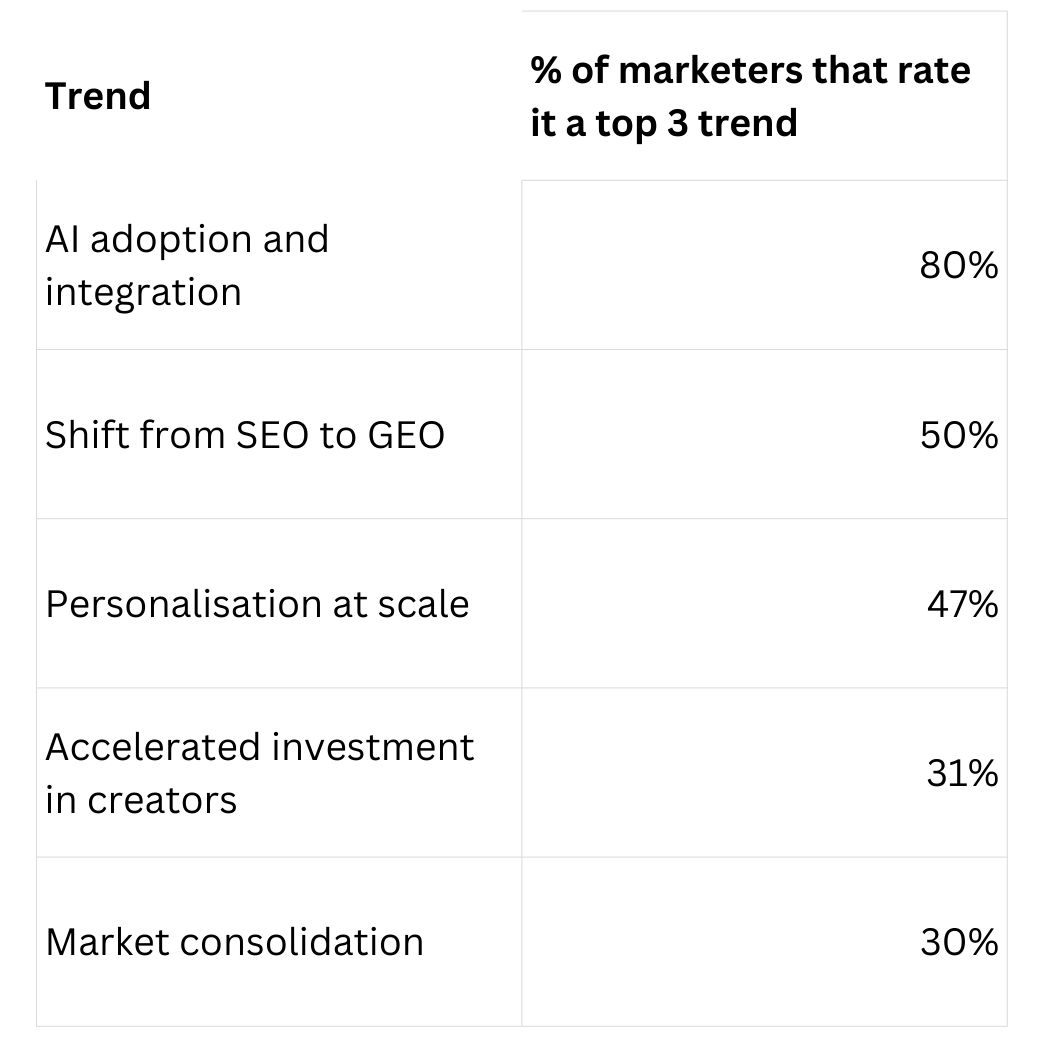
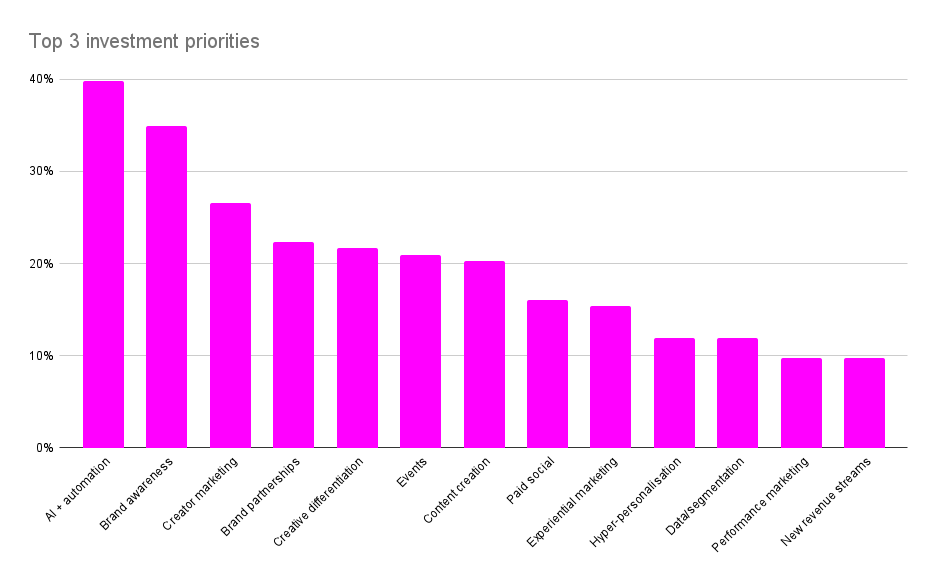
A whopping 80% of marketers put the adoption and integration of such technology in their top three trends of the year and it also ranked the top investment priority of marketers.
The Managing Director of one marketing agency says: “It will be the year where businesses stop playing around with AI and fully immerse it into their organisations.”
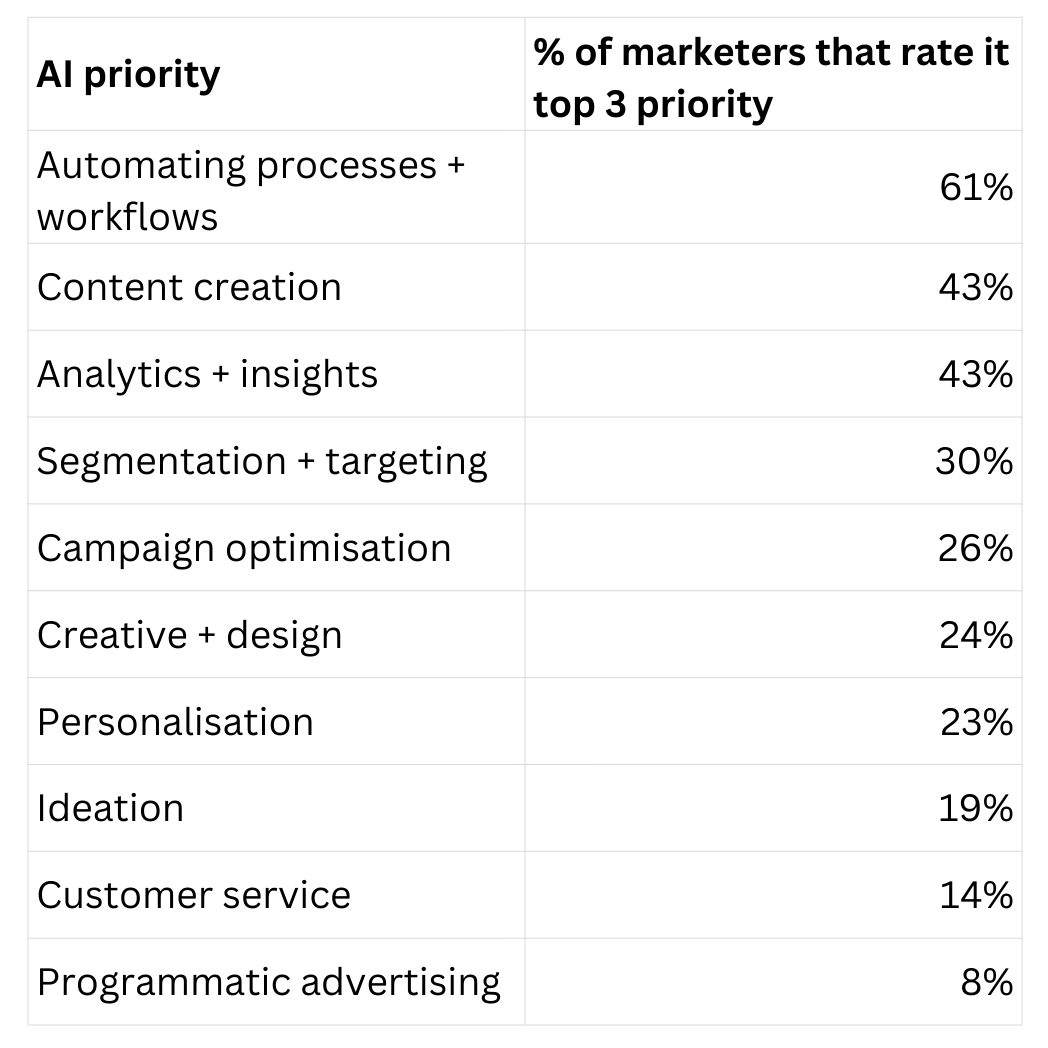
There are numerous areas where marketers are looking to implement AI but automating processes and workflows was the most common focus, with 61% of those surveyed rating this as one of their top 3 AI priorities for 2026.
This was followed by content creation and analytics and insights, both with 43%.
 One big agency exec foresees a “massive leap in automation and understanding how we can use of new tools to help make time for the bigger tasks and get to client demand in a better manner”.
AI is also predicted to have a huge impact on content and creative over the next year.
Many big brands have already embraced this. Unilever revealed last year that it was using AI to “reinvent product shoots”, capturing pixel-perfect versions of its products known as digital twins. It says product imagery is now being created twice as fast and 50% cheaper.
The FMCG giant has also launched SketchPro, an AI-powered design studio, which has the goal of delivering content three times faster for its brands.
This can help Unilever pounce on social trends. It shared the example of some content it produced in Indonesia that tapped into a lip-syncing Ramadan trend that went live in a matter of hours and delivered more than 6 million organic views.
The AI backlash
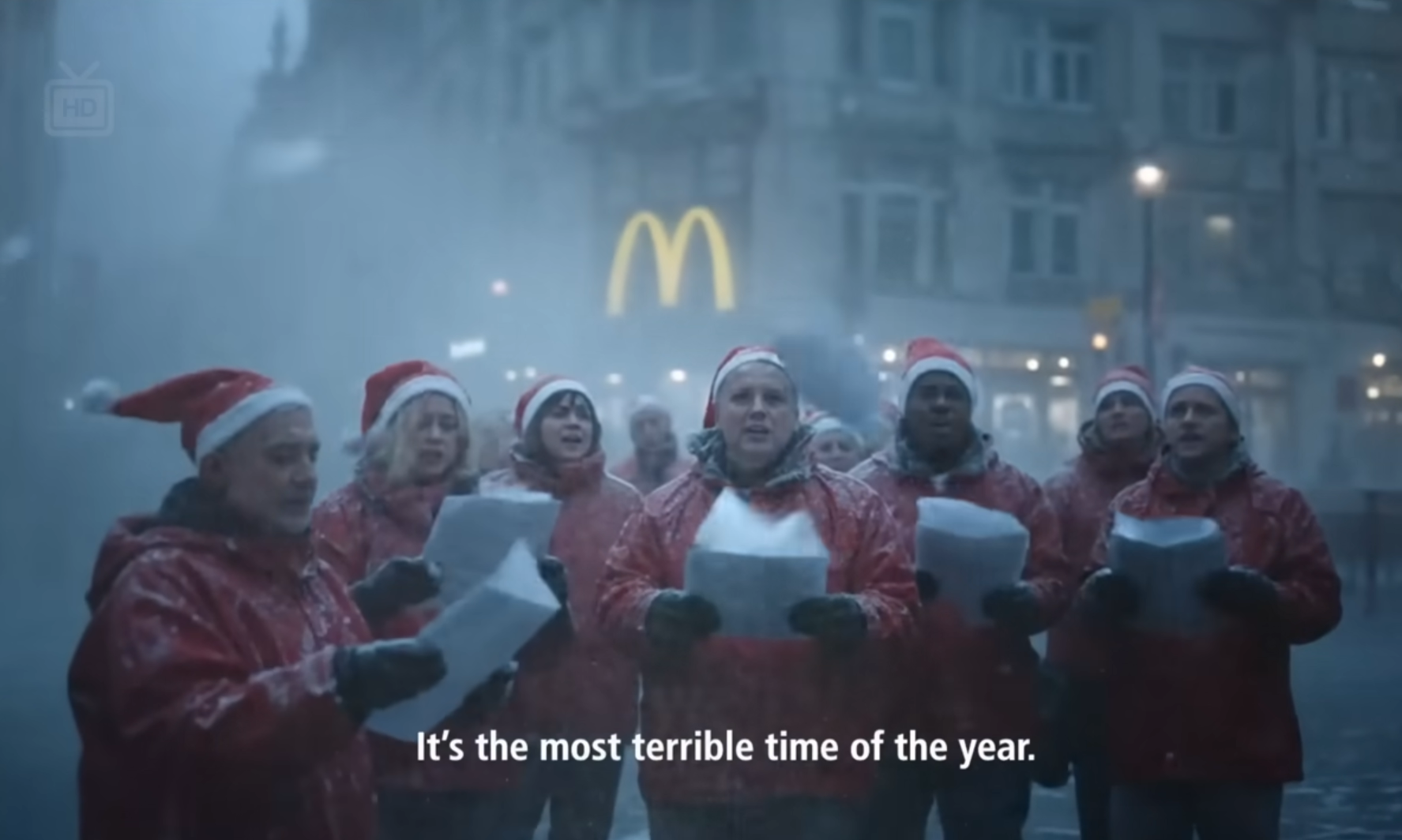
However, several big brands have faced a backlash for their use of AI in creative. Both McDonald’s and Coke were criticised for their AI generated festive ads.
McDonald’s Netherlands took down its AI-made Christmas ad after viewers called out its uncanny-looking characters and poor editing.
Coke, however, stood firm despite criticism with the firm’s Global VP and Head of Generative AI Pratik Thakar telling The Hollywood Reporter: “We understand [the] concern. But we need to keep moving forward and pushing the envelope.”
“The genie is out of the bottle, and you’re not going to put it back in.”
Getting the balance right between AI technology and human endeavour was the overriding theme that emerged from our survey.
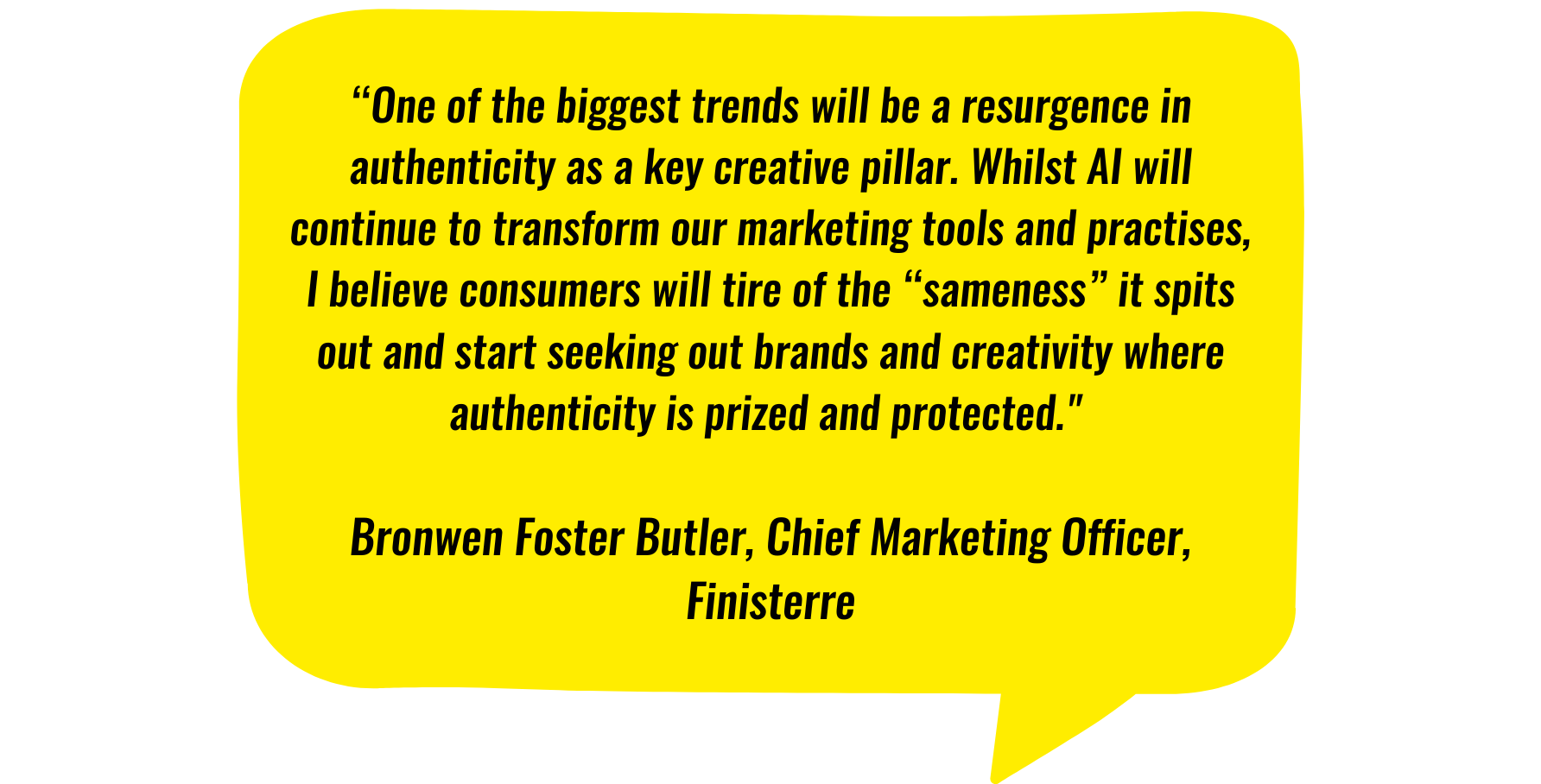 The strategy boss of an influencer agency tells MAD//Fest that marketing in 2026 will be defined by balancing human authenticity and intelligent automation.
“Brands will craft genuine, human-centric stories that resonate emotionally, while autonomous campaign agents optimise and deliver these narratives seamlessly across every touchpoint.”
The Head of Marketing at a tech firm agrees that the overriding theme of the year will be “the ability to intelligently blend human and AI to think differently, think creatively and drive meaning from a space of authenticity. Not just default to a ChatGPT prompt”.
Many of those surveyed believed that the consumer backlash that followed the McDonald’s and Coke ads will not be isolated incidents.
“While AI grows, people's distrust of it does too,” says the marketing leader of a wealth management firm who predicts this will spur a greater emphasis on “authenticity and personalisation amongst all the automated content”.
In fact, almost a quarter (22%) of marketers surveyed ranked “creative differentiation” as a top 3 priority for 2026.
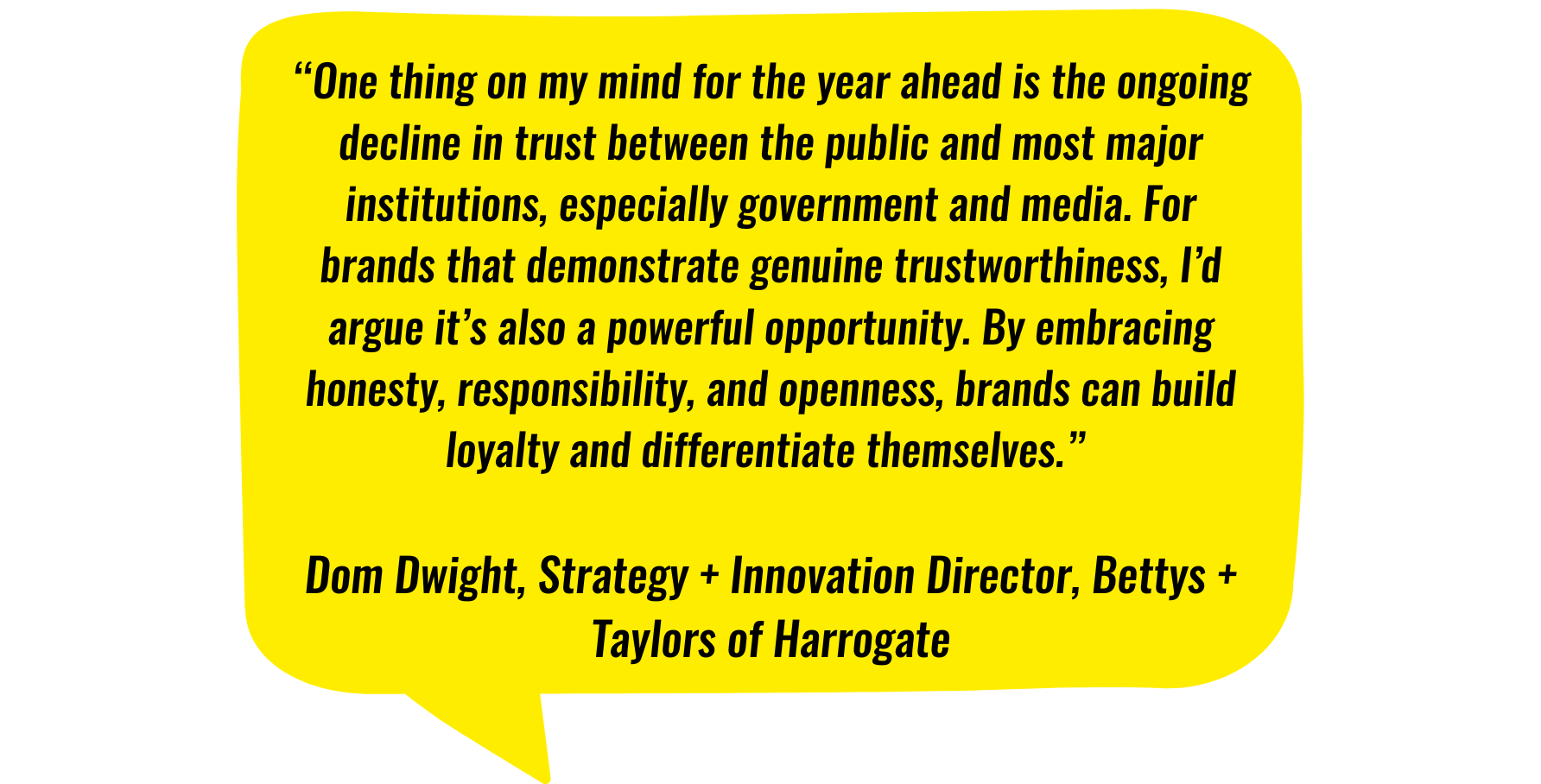 Another digital marketer concurs: “Building meaningful connections with your audience will be ever more important, as AI slop will create a disconnect for many consumers.”
“In our sector, marketing will be defined by those that can create and protect personality and uniqueness of a brand whilst the world is AI-ing itself to death.”
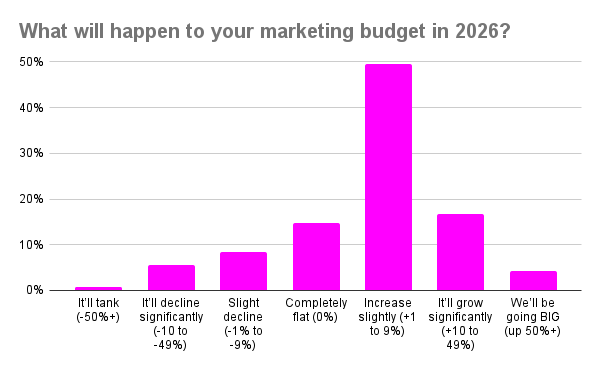
Despite the uncertainty in the market, businesses are not slashing marketing budgets for the year ahead. In fact, 70% of the leaders surveyed expect growth in their budget for 2026 compared to just 15% that predict a decline.
In fact, more than a fifth (21%) of marketers say their budget will grow more than 10% this year.
 Among consumer-facing brands, there has been a notable shift away from relying on raising prices to drive growth with many big FMCG companies looking to drive volume increases.
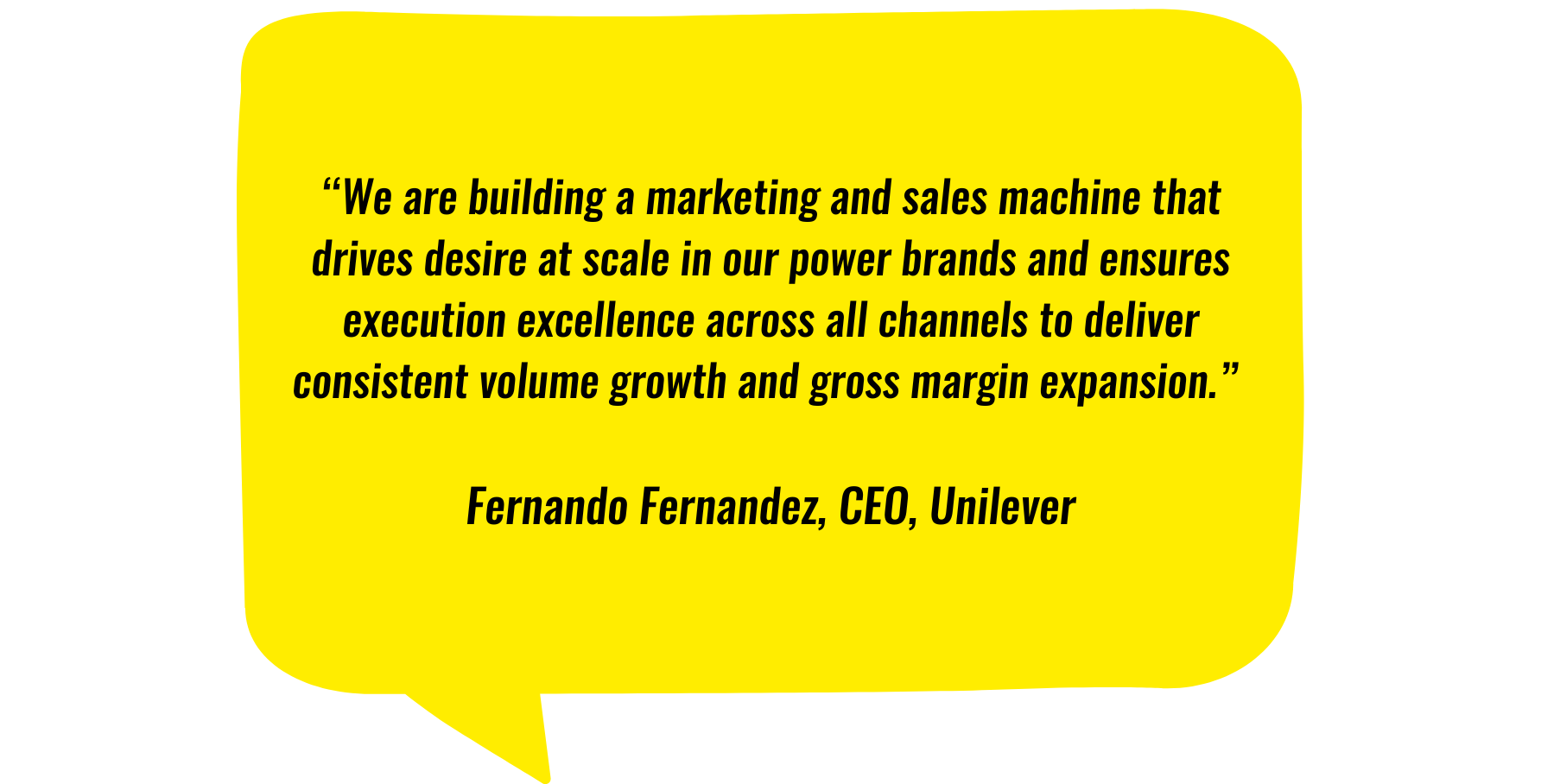
Unilever CEO Fernando Fernandez has pledged to “significantly invest” in brand and marketing as it looks to build a “marketing and sales machine”.
The consumer products giant increased brand and marketing investment by 40 basis points to 15.5% of turnover in its last reported half year.
 Nestle has also been “stepping” up its growth investment, with advertising and marketing budget up to 9% of sales by the end of 2025. The last time Nestle spent this proportion of sales on marketing was pre-Covid in 2019.
Confidence levels start to waver
Budgets might be growing but there is still some uncertainty in the market, which is impacting confidence in the year ahead.
Although just over half (51%) of marketers are confident of hitting their 2026 targets, 41% believe it could go either way and 8% are not confident at all.
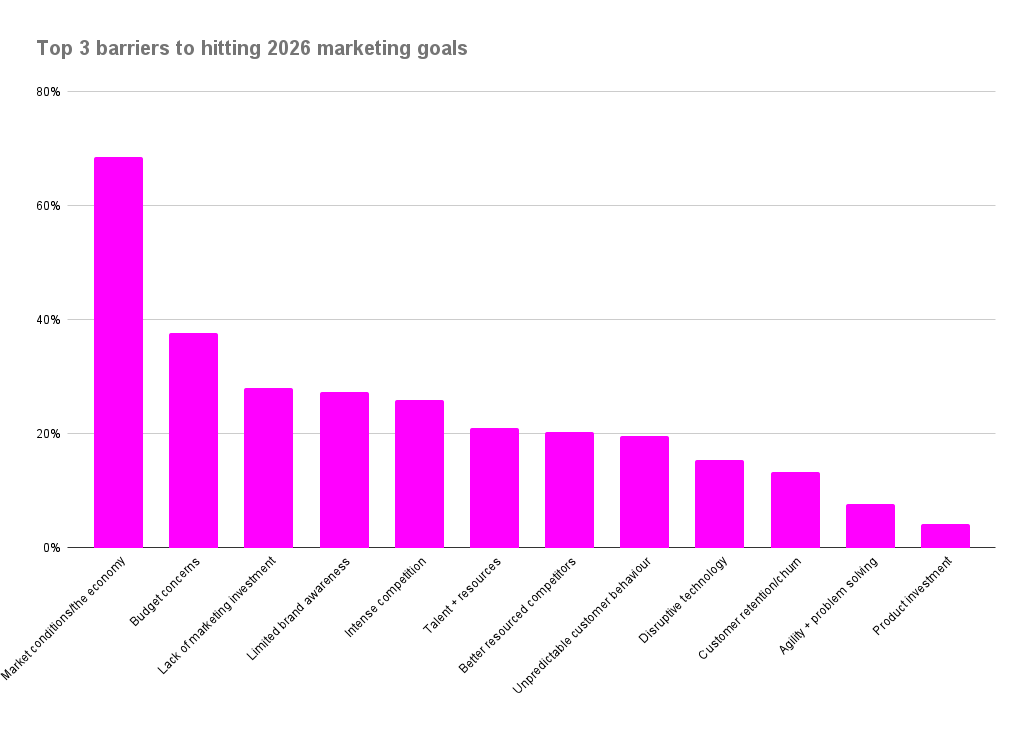
Many are concerned about macro-economic conditions with a whopping 69% of those surveyed citing this as their biggest barrier to hitting growth targets in 2026.
 Dominic Chambers, European Director of Marketing and Communications at INEOS Automotive, says that “succeeding in a volatile economy, avoiding Trump tariffs and making budgets go a lot further” will define the year ahead.
His predictions seem all the more prescient given the events of the first few weeks of 2026.
Fresh from launching military strikes in Venezuela to capture its president Nicolás Maduro, US president Donald Trump has launched a bid to take control of Greenland, and has threatened to impose greater tariffs on countries that oppose his demands, which include the UK.
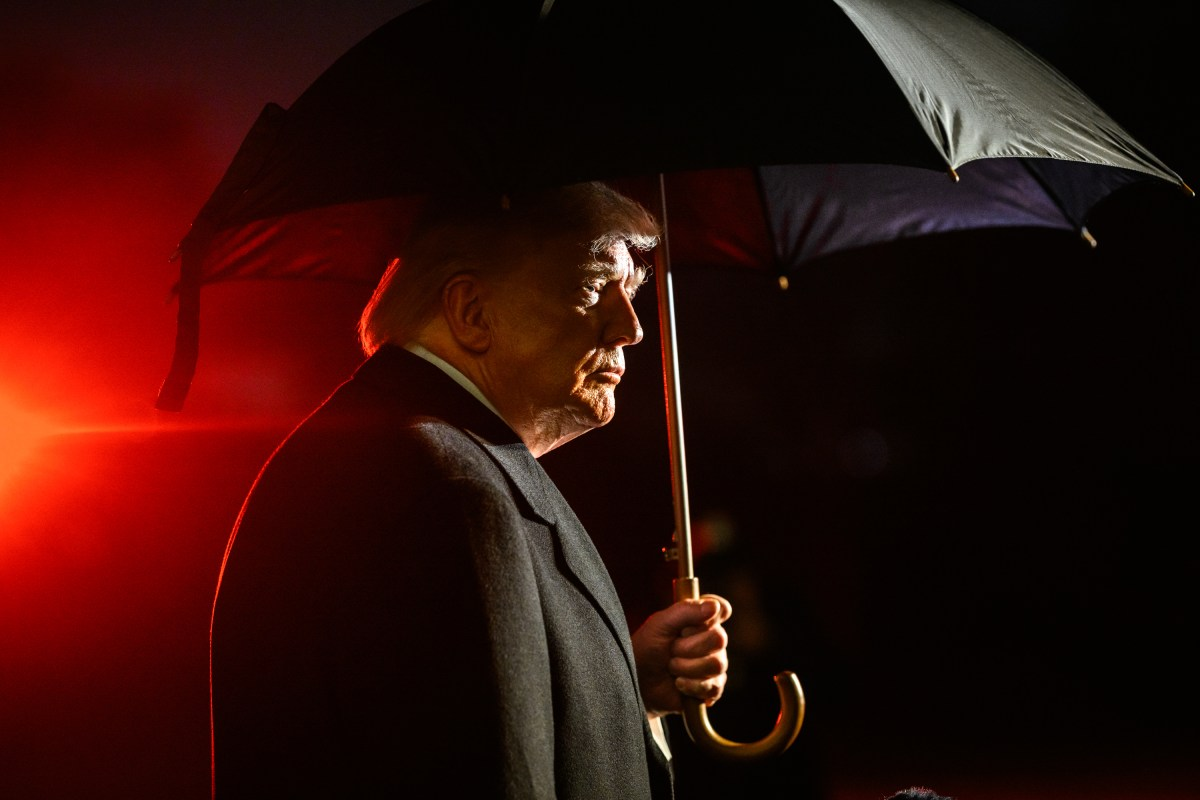 The move has left global stock markets braced for turbulence, which could have a damaging impact on the economy and consumers’ pockets.
Prior to this happening, consumer budgets were already a concern for marketing leaders. More than a third (38%) of marketing leaders put this as their top barriers to hitting 2026 goals, making it the second biggest concern, followed by 28% who were concerned about a lack of marketing investment.
The industry may be struggling to come to terms with the new reality of marketing in an AI-driven world, however, the age-old necessity of building brand awareness was the second biggest investment priority - after AI - with 35% of marketers ranking it within their top 3 investment priorities.
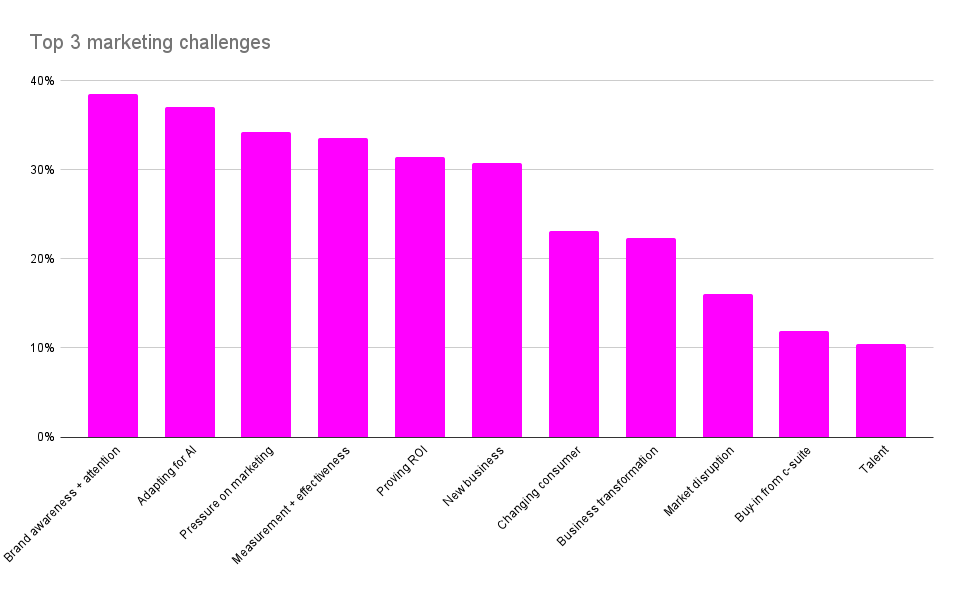
 In fact, brand awareness and attention was rated as the marketers top challenge for the year ahead by 38% of marketers, surpassing even adapting for AI (37%).
 The Head of Marketing at a creative agency predicts “a shift from the expectation that customers will just find you, to meeting them wherever they are”.
The Group Head of Marketing at a large car dealership concurs and says it was more important than ever to be “where - digitally and physically - our target audiences are”.
Social media is increasingly where those shoppers are, which is why creators and influencer marketing rated as the third biggest investment priority for marketers.
 Karen Lewis, Marketing Director at Chocomel and Yazoo owner FrieslandCampina, says “using creators for long term brand building rather than short term campaigns,” will define marketing in 2026.
Many major brands are already redirecting marketing spend into creators, most notably FMCG giant Unilever.
Upon taking the hotseat last year, new CEO Fernando Fernandez unveiled plans to spend half of Unilever’s media spend on social channels and work with 20 times more creators.
Fernandez believes that modern consumers are “suspicious” of traditional corporate messaging so the FMCG giant will switch to a “social-first” approach to marketing.
This will see media spend on social rise from about 30% to 50% of its budget.
Some of the marketers surveyed for Where’s Your Head At? say that “micro-influencers” would rise to the fore in 2026 as brands look for more authentic ways to attract consumers on social media.
One marketer says: “A major focus will be on authenticity and trust, demanding more transparent, human-centred storytelling, and a shift toward building community and leveraging credible micro-influencers.”
Some of those surveyed may have predicted a shift to where the customer is, but a medium that taps into this is not expected to surge quite as much as industry watchers have predicted - retail media.
Although just 8% of the marketers that use retail media expect their spend to decline next year, only 5% believe it will increase significantly.
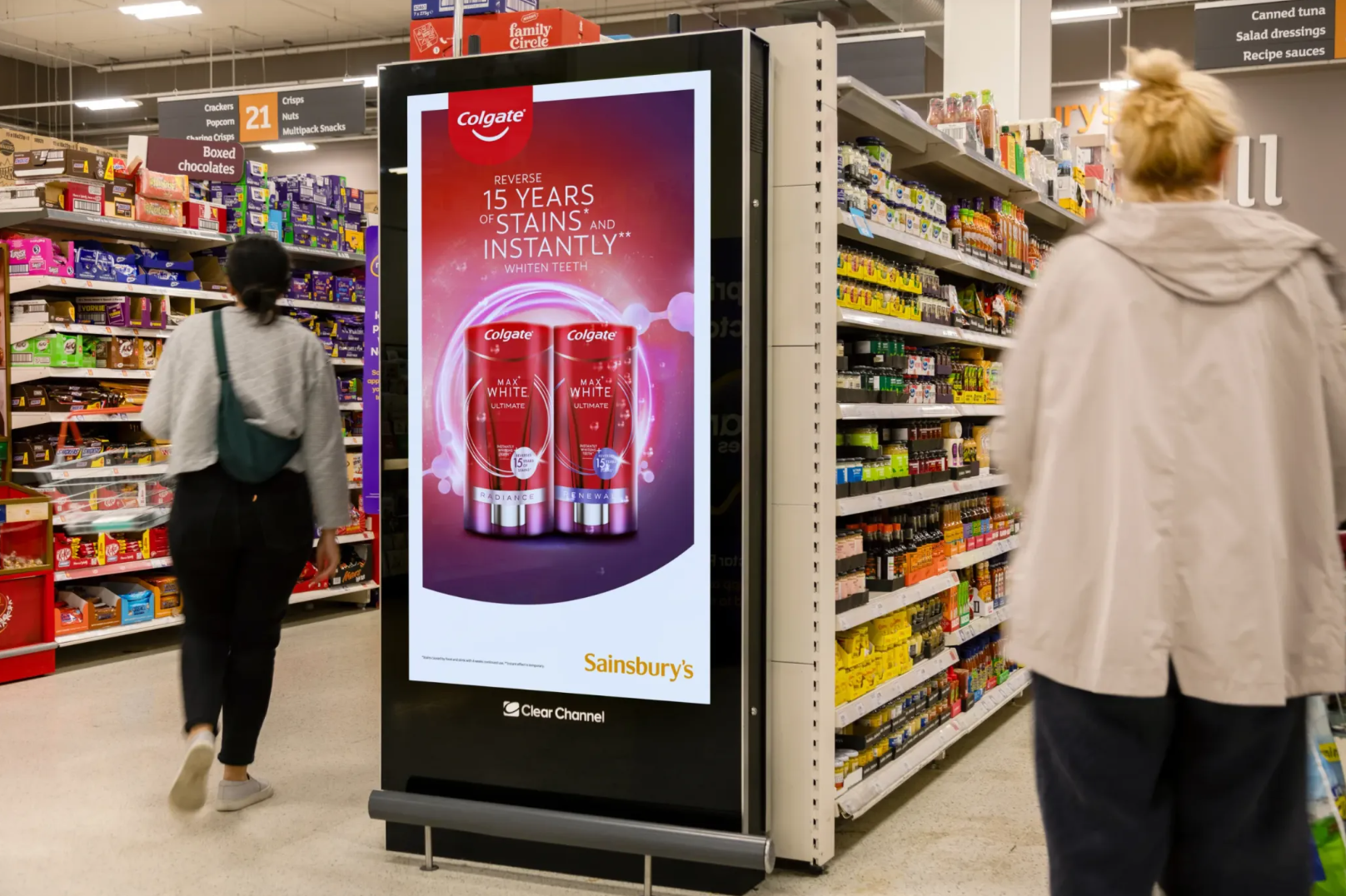 The vast majority of those surveyed said their retail media spend will remain pretty flat (40%) or will see moderate growth (37%).
Although not to be sniffed at, this level of growth looks sluggish when compared to KPMG’s forecast that UK retail media spend will jump 20% from £4bn last year to £4.8bn in 2026.
Trend watch: GEO and personalisation
AI has also stimulated some other big trends that marketers are backing in 2026.
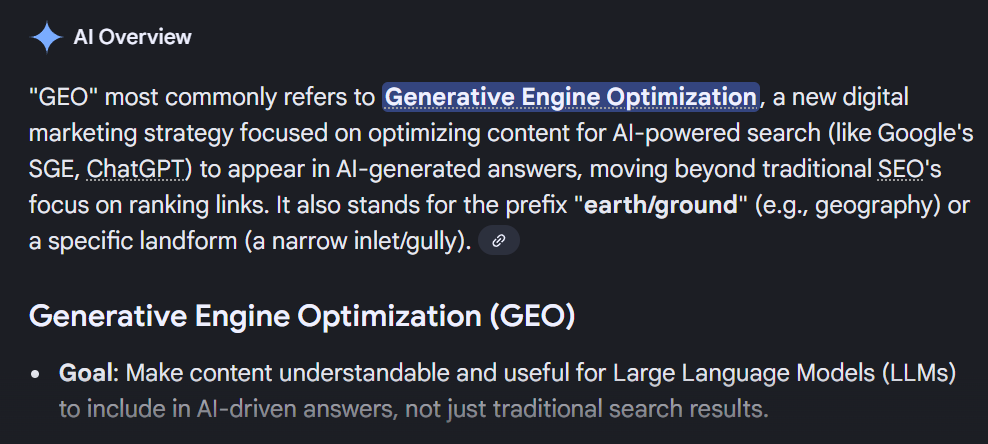
Half of those surveyed put the shift from SEO to GEO as one of their top three trends.
Apps like ChatGPT, Google Gemini, and CoPilot, and Google’s AI overview - which is now featured on around 50% of searches - are growing in popularity.
According to a McKinsey survey, half of consumers intentionally seek out AI-powered search engines, therefore it’s imperative that brands now stand out and reach customers through this new medium of search.
 The Marketing Manager of a workplace tech platform says: “Marketing in 2026 will be defined by the growing challenge of visibility in an AI-driven search landscape. As algorithms increasingly curate results based on user intent and generative models, traditional SEO tactics will lose influence.
“Success will depend on creating genuinely authoritative, human-centered content that earns trust and relevance across AI ecosystems, not just search engines.”
Another trend which marketers believe will take off in this age of AI is personalisation at scale, with 47% placing it amongst their top 3 trends.
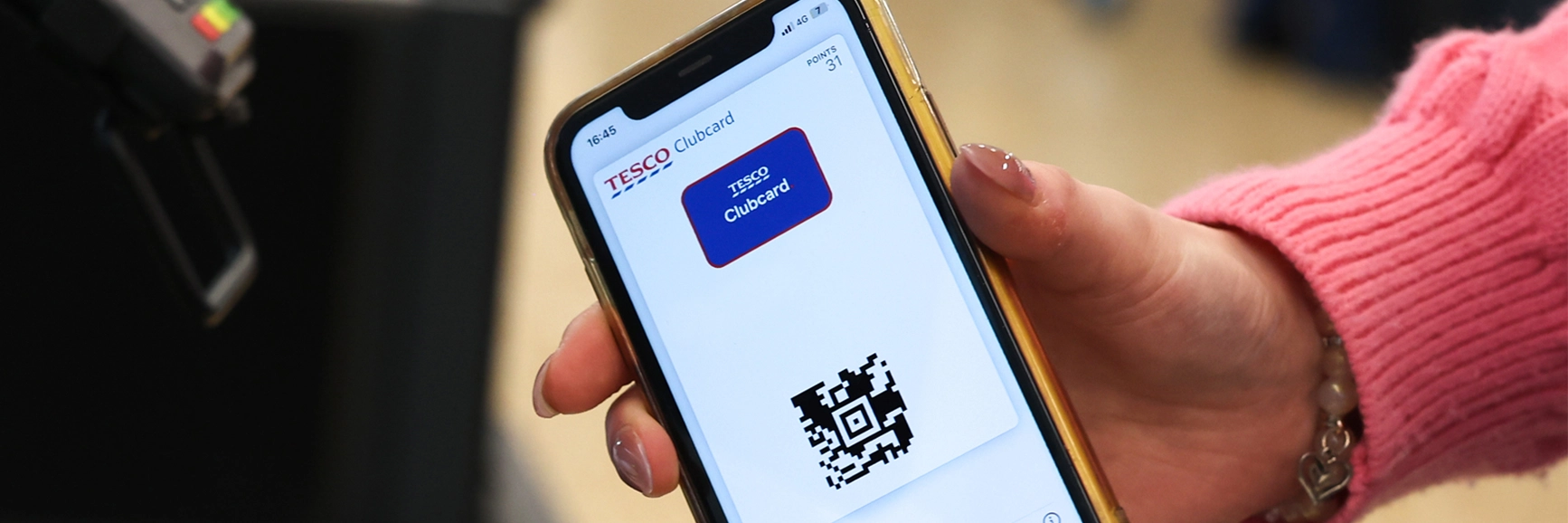
Many businesses are striving to go deeper when it comes to personalisation. Last month, the UK’s largest supermarket Tesco inked a three year deal with French startup Mistral AI in December to develop generative AI tools, which includes a revamp of its personalised Clubcard offers.
The retailer had already trialled Your Clubcard Prices, offering customers personalised offers based on their shopping habits, and also extended its partnership with data platform LiveRamp last year to offer “more personalised and informative” advertising.
 Once again, several marketers we surveyed flagged the importance of marrying personalised ads and content with authentic, human-centric storytelling.
The Marketing Manager of a theme park business says: “Marketing in 2026 will be all about hyper-personalisation, with AI helping brands tailor every interaction in real time. Authenticity and transparency will matter more than ever, as people connect with brands that genuinely reflect their values.
The Senior Planning Manager at a digital agency concurs: “Success will come from blending intelligent automation with genuine, values-based communication that builds lasting trust.”
In these times of rapid technology change, it’s good to know that the fundamentals of good marketing remain static.
One thing is sure about the year ahead, marketers are in for a crazy ride.
As the Director of an independent agency told MAD//Fest: “Marketing in 2026 will be all about disruption. These uncertain times are pretty exciting since our roles as marketers are growing more vital. Let's go catalyze a culture of experimentation.”