AUGMENTED
CREATIVITY

2 June 2026
Introduction
Augmented Creativity is fast becoming the new reality. More than half of brand marketers (57.5%) are now using AI to generate content and creative campaign ideas, according to Marketing Week’s 2025 Language of Effectiveness research.
That’s not to say creatives are now redundant. In fact, in this AI-powered world, the human touch is more important than ever.
After all, marketing is about connection - to cut human ingenuity and instinct from the creativity process risks losing that.
We also act as an arbiter of brand identity and voice. In a world awash with so-called AI slop, it is critical that we protect our brands more than ever and make sure the technology’s output is aligned with our message and positioning.
The new normal will see creatives using AI as a creative collaborator, a true partner in co-creation.
MAD//Fest + Frontify’s Augmented Creativity report explores the brands that have embraced AI in the creative process and the brilliant campaigns that have been produced when combining the best of technology with the best of humanity.
Read on for your dose of creative inspiration.
COCA-COLA:
COMBINING ART WITH AI
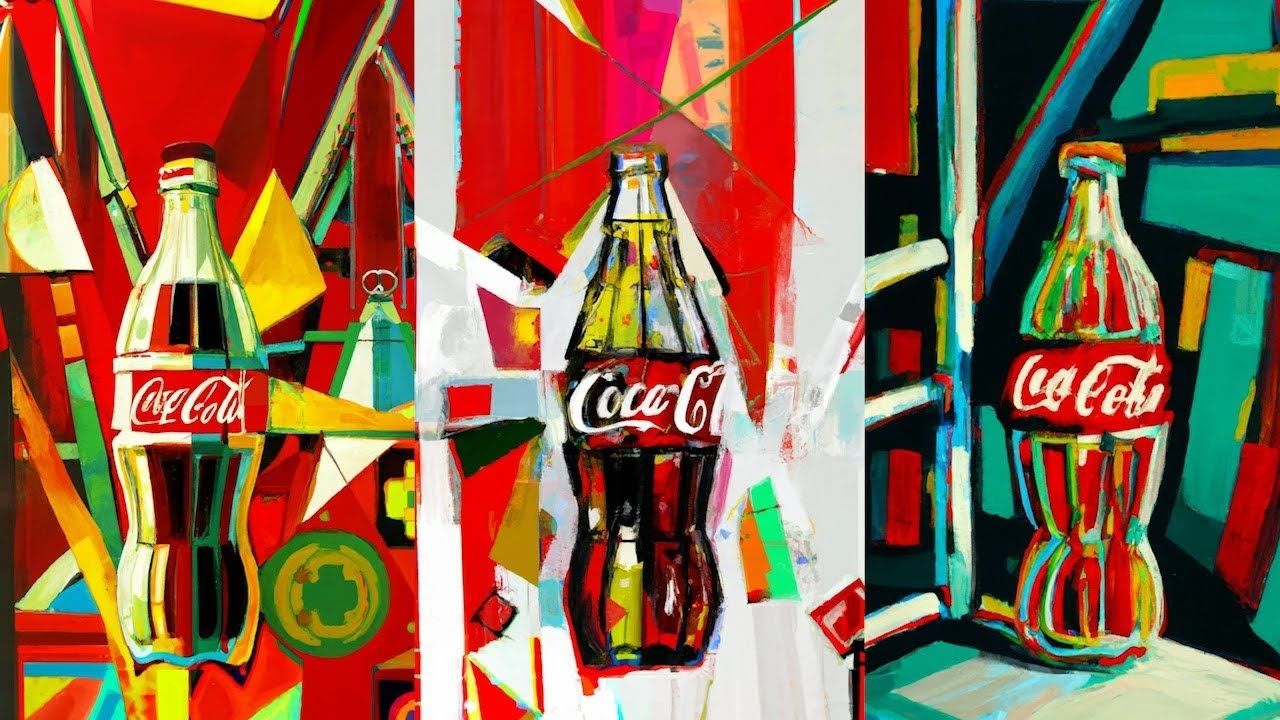
Coca-Cola has become an advertising AI trailblazer, using partnerships with specialists such as OpenAI to experiment and innovate. It not only creates personalised quick-fire content, it has also released AI-generated ads.
One of its most lauded AI campaigns was one of its first - and it was a true partnership of AI and humans.
Back in 2023, the brand invited digital creatives to generate original artwork using iconic creative assets from its archives in its ‘Create Real Magic’ campaign.
The brand made its branded assets including its distinctive contour bottle, famous version of Santa and Spencerian script logo available online for people to use as a canvas for AI-powered experimentation and creative iteration on a platform built by OpenAI and Bain & Company.
It was the first platform to combine GPT-4, which produced human-like text from search engine queries, and DALL-E, which created images based on text.
Artists then submitted their work with a select few chosen to be featured on Coke’s digital billboards in New York’s Times Square and London’s Piccadilly Circus.
Pratik Thakar, Global Head of Creative Strategy and Integrated Content at Coca-Cola said: “It’s an experiment to see where co-creation can take us. We’re moving at the speed of culture with an innovative program that’s very tangible for the creative community.”
The campaign formed part of Coca‑Cola’s 'Real Magic' global brand platform, which is rooted in the idea that magic lives in unexpected moments of connection that elevate the everyday into the extraordinary.
“Real artists, actual humans, are using AI technology, which is algorithmic and mathematical, to create an output that’s truly magical,” Thakar said.
Thousands of submissions poured in with Coca-Cola showcasing many of them on billboards. It generated global engagement, and opened a much broader conversation about how generative AI can be used in creative, positioning Coke as a pioneer.
UNILEVER:
PRODUCING CREATIVE AT SCALE
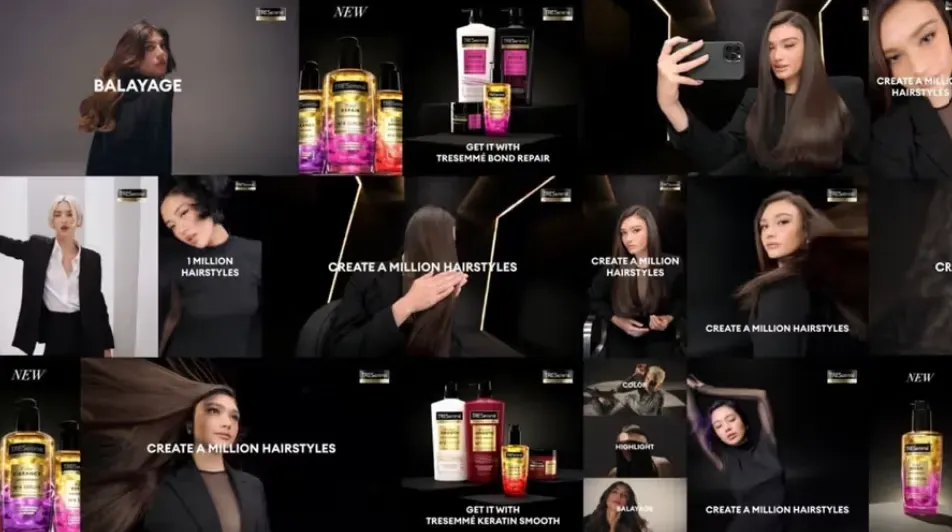
FMCG giant Unilever is using AI-powered content creation to fuel a marketing transformation that is delivering growth and reach for its brands.
A great example of this is its ‘Beauty AI Studio’, an in-house system for creating AI assets for paid social, programmatic display and ecommerce for brands including Dove, TRESemmé and Vaseline across 18 markets.
The system uses Pencil Pro, a generative AI tool developed by tech firm Brandtech Group. Unilever marketers use prompts and their own insights to generate images and video based on 3D renders of each product.
Prior to introducing the studio, Unilever created 20 assets per product campaign, now it creates hundreds.
Its marketing team can produce creative assets 30% faster while other performance metrics such as video completion rate and click-through rate have also more than doubled.
Beauty AI Studio allows teams to quickly double down on what works by optimising assets in real time, guided by the best-performing creatives.
These wins are achieved without compromising on brand integrity thanks, in part, to a Brand Safe AI training repository called Brand DNAi that ensures AI models source information only from a data pool of approved brand voices, values, strategies and visual identities.
Unilever says that ultimately AI helps it to build Desire at Scale, delivering “emotionally resonant, brand-authentic storytelling with greater speed, precision and cultural relevance”.
Using AI is clearly a big focus for Unilever, however, the human touch is still essential.
Chief Marketing Officer Leandro Barreto says that creativity and infrastructure are essential in its marketing and uses the analogy of “poetry and plumbing”.
“Poetry is the cultural intuition and creative courage that sparks ideas people care about. Plumbing is the operating backbone – the systems, data and AI capabilities – that allows you to optimise and scale those ideas quickly.
“Poetry creates emotional resonance and desire. Plumbing makes it repeatable and exponentially more effective; that’s how we create Desire at Scale.”
L’OREAL:
LOCALISING VISUAL ASSETS

L'Oréal is accelerating its marketing and content production through its GenAI beauty content lab CreAItech.
CreAltech combines an ecosystem of models, expertise, technologies, and partners - including Google, Adobe and OMI - and enables marketers to generate thousands of unique, on-brand images, texts, and videos for diverse platforms and global audiences.
The AI capabilities have helped supercharge L'Oréal’s creative ideation and streamline marketing production. By describing an idea with simple prompts, teams can generate high-quality visuals that perfectly align with their brand.
One area that this has helped with is localising campaign visuals. L'Oréal can take any asset and generate around the product.
L'Oréal Groupe Data and AI Enterprise Architect Antoine Castex uses the example of product shots taken in a European studio, which can be “exported” to other markets by using simple text prompts.
“We can easily customise the imagery for different markets. We can take the same product shot and seamlessly place it in a Japanese garden, on a bustling Parisian street, or any other relevant setting, ensuring the visual resonates with the local audience while staying true to the brand,” he said in an interview with Google.
The beauty giant has used this to scale localised messaging and creative across social media in 20 markets.
Marketers can also bring static images to life via CreAItech with Google’s Veo 2 model transforming stills to eight second animated sequences, which dramatically accelerates the production of video assets.
The beauty behemoth may use AI to create product images but it has pledged not to use it to generate ‘lifelike’ faces, bodies, hair or skin and has put “a robust ethical framework” in place for its AI usage.
VIRGIN VOYAGES:
JEN AI, PERSONALISATION FROM YOUR CELEBRITY AMBASSADOR
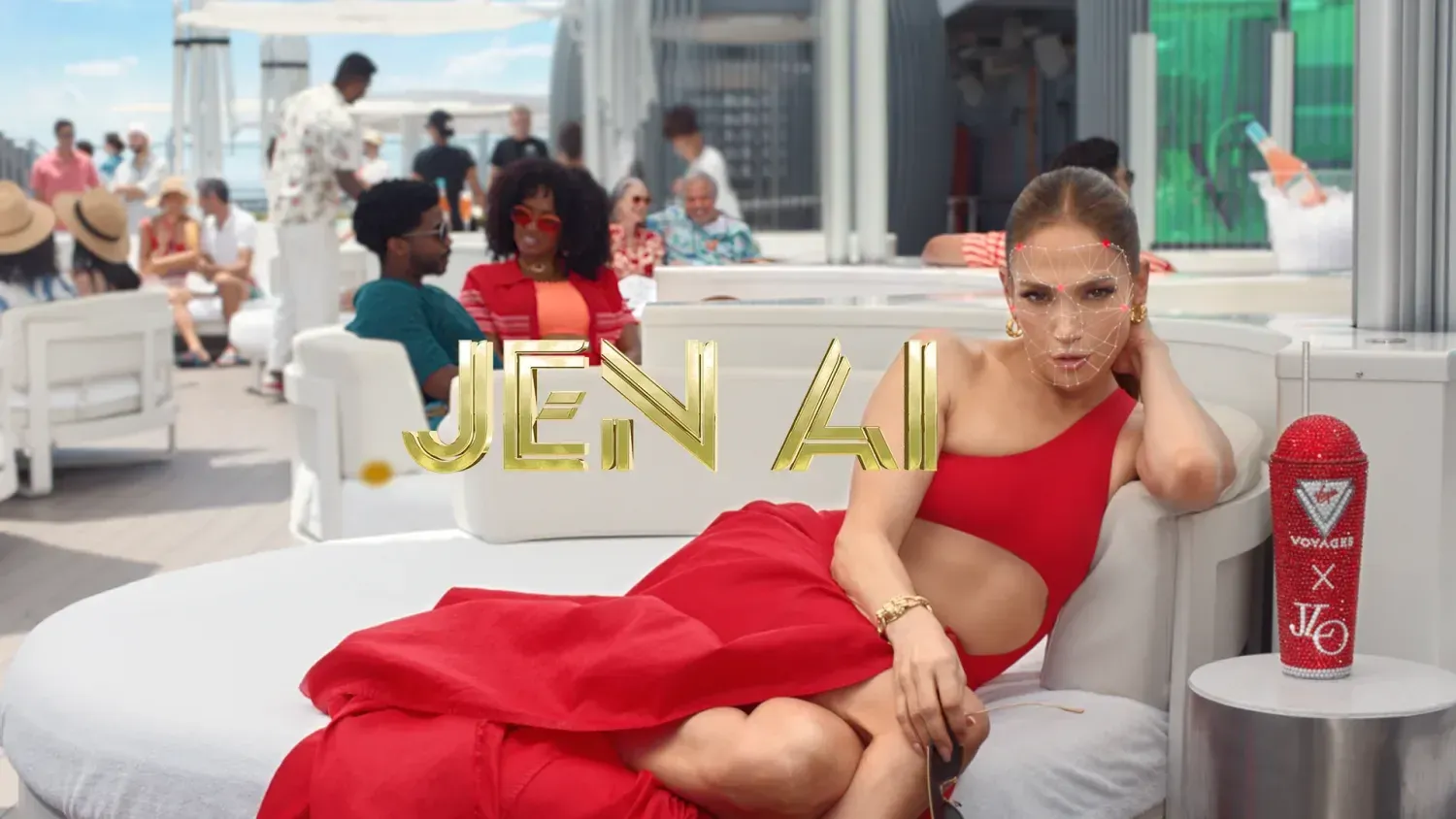
Travel firm Virgin Voyages and its agency VML both used and poked fun at AI in 2023’s Jen AI campaign that saw a virtual Jennifer Lopez send customers personalised invites to board a cruise.
The fun ad, which tapped into the hype around generative AI, saw Lopez take on the fictional role of Virgin Voyages’ Chief Celebrations Officer and invite people on a voyage, with viewers urged to create their own custom invite online.
Generative voice and video technology made this personalisation at scale a reality. AI specialist Deeplocal brought Jen AI to life visually, while SpeakUnique worked to develop her voice.
The campaign certainly made waves with almost 200,000 people visiting the Jen AI microsite, while more than 25,000 personalised invites were sent.
The AI technology might have made this fun personalisation possible but the core of this ad is a fun idea and way to tie-up with a big star.
As VML Creative Director Perle Arteta and Group Creative Director Gretchen Menter told Little Black Book at the time: “Watching Jen AI come to life was a labour of love and a great reminder that the best things take effort and heart.”
Popeyes:
using AI for reactive marketing
Rivalries are rife in the world of fast food, with firms often taking swipes at each other in ad campaigns and social media, however, AI is giving this new impetus.
When McDonald’s tried to hijack Popeyes’ Chicken Wrap launch by announcing the return of its long-retired Snack Wraps just one day after its release, the Louisiana chain hit back.
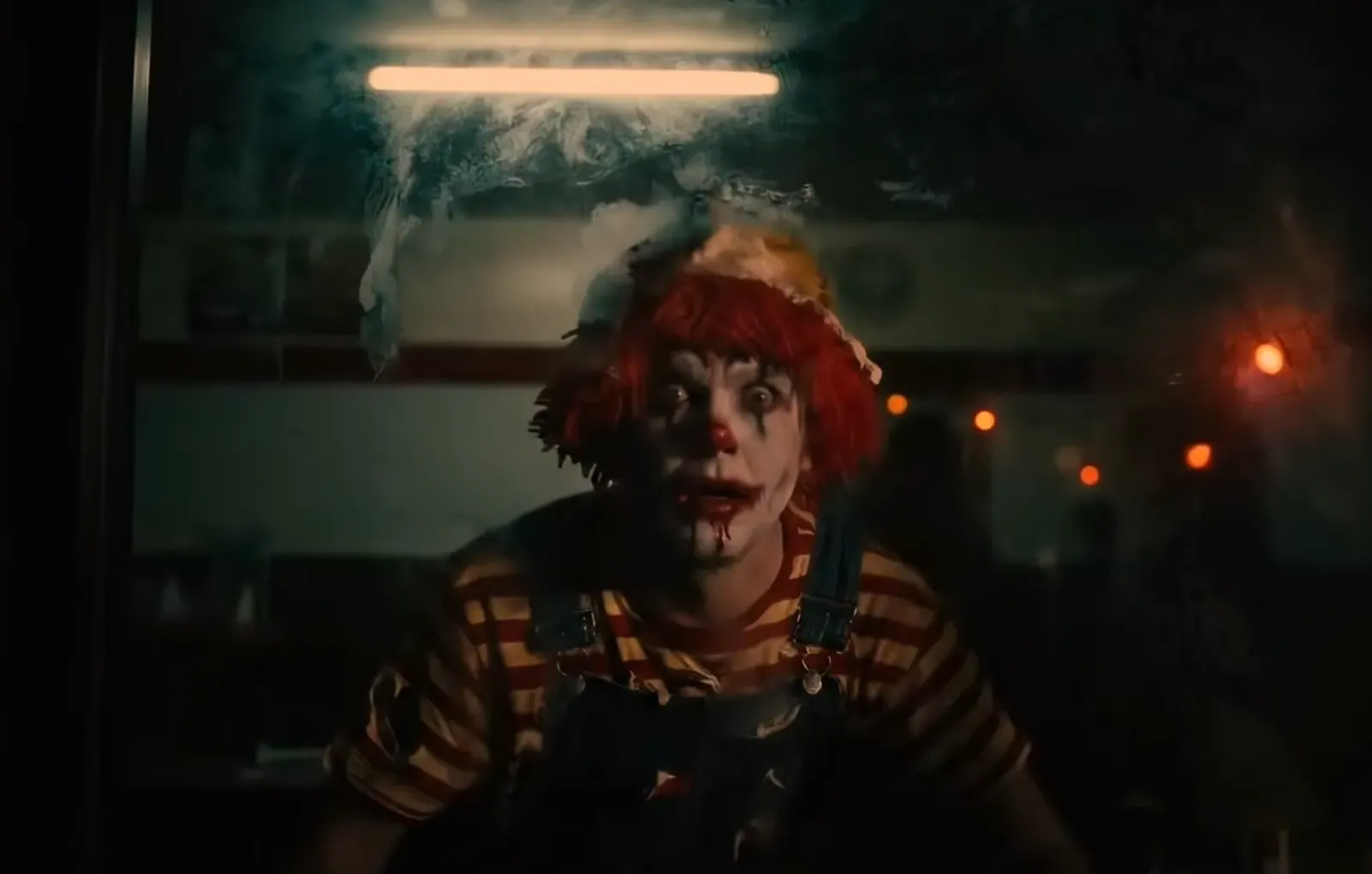
Popeyes produced a tongue-in-cheek, AI-generated, diss ‘wrap battle’ track titled ‘To All The Clowns In The Kitchen’.
The song argues that Popeyes wraps taste better and there is far less clownery behind the counter with lyrics such as “food be tasting funny when the clown be in the kitchen”. The accompanying video featured a Ronald McDonald clown character.
With the spat coming down to the suspicious timing of the wrap release, it was critical that Popeyes get its timing right and react quickly to McDonald’s chicken wrap hijack.
Popeyes enlisted the help of AI filmmaker PJ Accetturo to produce the rap and music video.
AI music production platform Suno was used alongside humans that fine-tuned the track, while the video was made using Veo 3, Google’s AI video generation tool.
A slick music video was released on social media in just 3 days allowing Popeyes to capitalise on the wrap battle.
This example gives a hint of how AI could transform the world of reactive marketing with brands able to create high-quality, brand-enhancing content - be it images, video or audio - at speed.
NIKE:
USING AI TO MAKE THE IMPOSSIBLE, POSSIBLE

Two days after tennis superstar Serena Williams announced her retirement, Nike released its ‘Never Done Evolving’ campaign, a case study on what it takes to stay on top for over two decades.
Working with innovation firm AKQA, Nike carried out a year-long AI analysis into Williams’ performances over 130,000 games that culminated in a virtual match taking place between the tennis player at 17, when she won her first Grand Slam, and a 35-year old version of herself.
Machine learning modelled Williams’ playing style, decision making, shot selection, reactivity, recovery and agility based on archival footage.
Building on the vid2player technique developed by Stanford University, Nike brought the 17 and 35-year old models of Williams to life by re-rendering the player from each generation into an entirely new scene and have them play and respond to each other.
The virtual match was broadcast on Nike’s YouTube livestream and reached over 1.69 million subscribers. The game broke all of Nike’s organic view YouTube records, up an astonishing 1082%, according to its benchmark data.
The campaign, which delves into the evolution of an elite athlete, showed what is possible in terms of sports analytics, and positioned Nike at the cutting edge of sports innovation.
FRONTIFY’S TIPS FOR SUCCESS
Frontify CMO Digge Zetterberg Odh gives her top tips for marketers looking to get the best out of AI.
1 If AI can't read your brand, it won't follow it
Encode your brand as structured data: tagged, organised, and queryable so that AI tools can fetch the right rule for the right moment. Otherwise, AI defaults to generic outputs, not your brand. And 90% on-brand is still off-brand.
2 Make your brand a single source of truth
AI tools don’t reconcile conflicting sources - they pull from whatever you point them at. So a brand scattered across drives, decks, and team folders means a brand scattered across outputs. Centralise it in one living platform that every team and every AI tool draws from.
3 Fix your foundations, then scale
AI amplifies everything, including inconsistency. And it can’t fill in the gaps. Strong foundations - guidelines, governance, and structure - are what turn AI from a volume engine into a genuine creative collaborator that produces on-brand work at scale.
4 Connect your brand to AI, not just to your team
Without a connection layer like Model Context Protocol (MCP), your brand knowledge stays siloed from the AI tools your teams use every day. Bring brand into every workflow so that outputs are grounded in real context, not reinvented from scratch each time.
5 Build infrastructure for AI, but keep creativity human
AI is a powerful creative collaborator, but it doesn't replace human instinct. The best brands combine strong systems with creative judgement, using AI to scale ideas, not define them. That's how you achieve speed without losing originality or emotional connection.
)
)
)
)
Join Our Mailing List
Speaker updates, ticket giveaways and exciting opportunities - don’t miss a thing and be the first to know about what’s happening at MAD//Fest


