
Forget personalisation, customers just want consistency
11 May 2026
What if the secret to winning customers wasn't better technology, but behaving more like a decent human being? John Sills, author of The Human Experience, Managing Partner at customer-led growth consultancy, The Foundation, puts data behind that hypothesis and the results are more compelling than even its author expected.
Back in 2023, I wrote a book called The Human Experience. People seemed to like it.
I suggested that customers are more likely to give their money to organisations that have kept hold of their humanity in a sea of functionality. This means behaving in seven complementary, human ways – Accessible, Consistent, Flexible, Proactive, Respectful, Responsible, Straightforward. All traits that define our opinion of a good relationship.
But here’s the thing: it was a bit of a guess.
Not a total guess, you understand. After all, if your partner didn’t answer your calls, wouldn’t let you message them, didn’t keep their promises, made you organise anything you did together, spoke in words you couldn’t understand, blamed you when things went wrong, and was nicer to new people they just met than to you, would you stay with them? I hope not.
But it was a qualitative hypothesis, based on what I could see and hear, what leaders I spore to told me. But it didn’t have any data behind it. Surely, if I say things confidently enough, we can all just agree they’re probably correct?
Well, the folk at The Foundation decided this wasn’t good enough. And so, we went to find out if I was right. And it turns out, these human behaviours have more of an impact on customers’ decisions than even I thought they would
In our new report - The Human Experience Advantage – we surveyed 5,000 customers, across 277 UK companies in 24 industries. We tried to understand how important these behaviours are in earning customer decisions, and which of the behaviours matter the most, right now. The answer, it seems, is very.
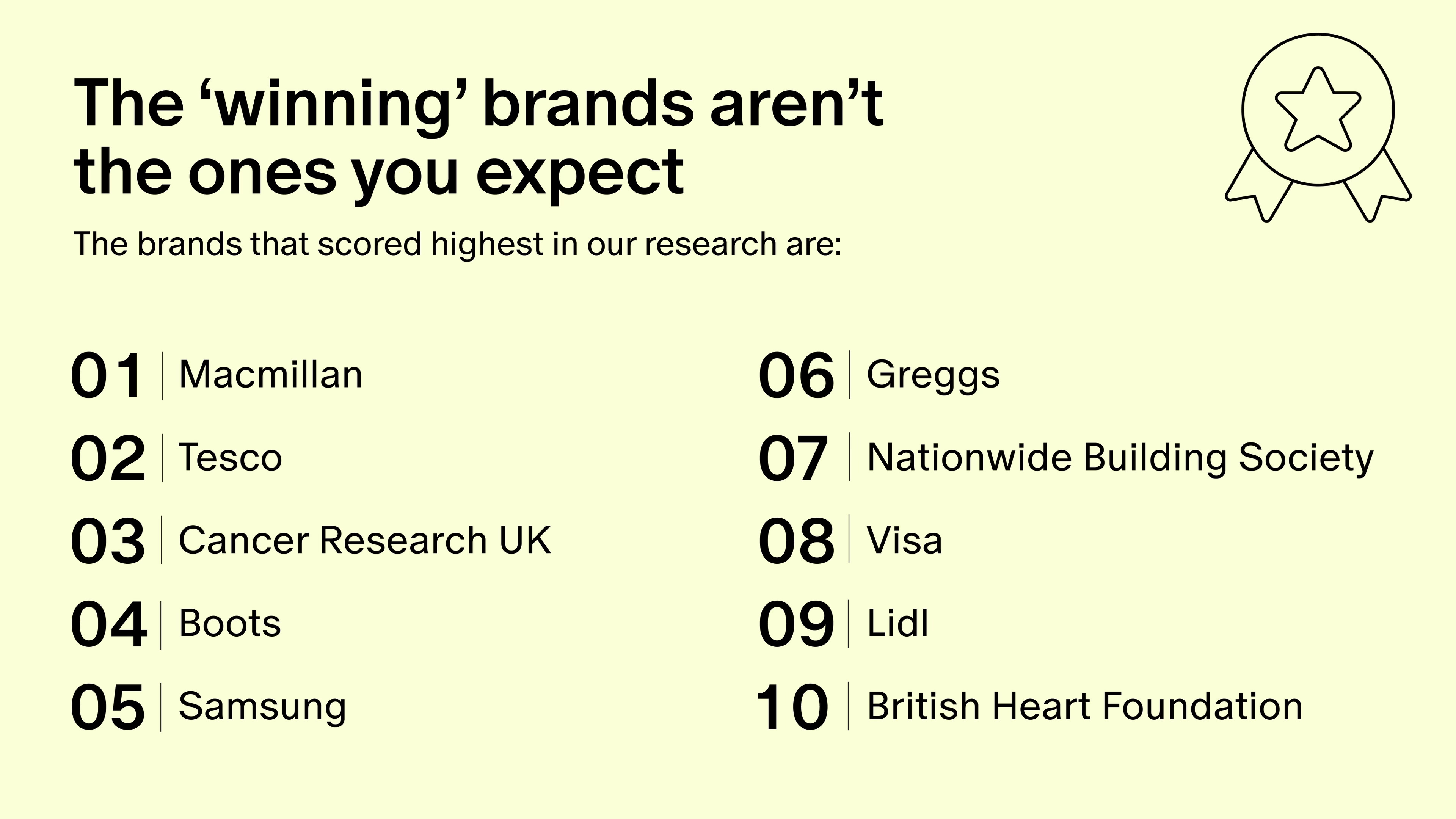
70% of brand consideration is explained by the seven organisational behaviours, consistent across demographic and category. In a chaotic and uncertain world, consistency and straightforwardness far out-perform flexibility and proactivity (despite the current obsession with ‘personalisation’). And the winning brands, well, they’re not the ones you might expect, with Tesco, Samsung and Greggs outperforming John Lewis, Apple and Pret.
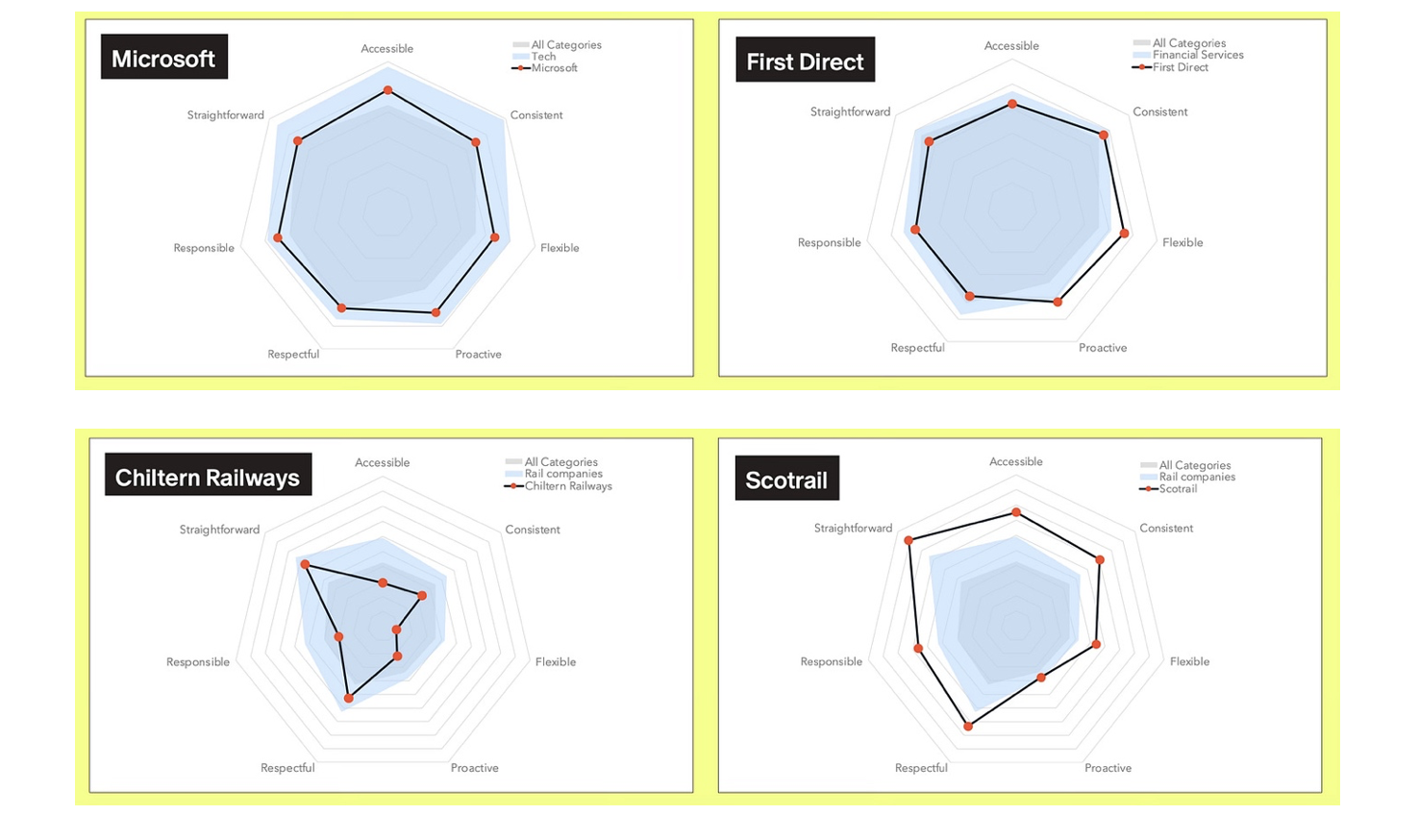
Our study also showed that there isn’t just one way to ‘win’. Some brands are ‘steady’, performing solidly across all seven behaviours. Whereas others are ‘spiky’, choosing one or two behaviours to really excel at, to be meaningfully distinct from the rest of the industry on. Do you want to be meaningfully distinct, or distinctly average?
But the biggest surprise was just how much this humanity still mattered to customers. The onslaught of new AI technology that’s appeared since the book was published could genuinely make things better for customers – but could also repeat the mistakes of the past, of chatbot gatekeepers, impersonal IVRs, and email overload.
We’ll never want inconsistency. We’ll never want confusion. So the organisations that retain human behaviours, whilst adopting AI, will be the ones who ultimately earn more customer decisions in their favour - in an increasingly efficient way for the company.
The full report, along with the list of the top 100 organisations, is available to download on The Foundation’s website (https://www.the-foundation.com/the-human-experience-advantage-report)