
Are People Writing Songs About Your Brand?
27 April 2026
How does a brand become so relevant it ends up in song lyrics or everyday chat? Former Beavertown Brewery marketing director Tom Rainsford argues it’s not ads, but authenticity, shared values, and real cultural belonging that drive fame.
Susan Sontag was right when she observed in the 1970s that “Today everything exists to end in a photograph.”
When I was 12 years old, I started playing in rock bands. It was the 1990s and peak-Metal era; Metallica, Guns ‘n’ Roses, Faith No More, Soundgarden, Tool, the list goes on.
I had no doubt about the quality of the music we produced.
Retrospectively, I think I should have had many doubts.
It probably sounded like a cat in a washing machine. Anger (the cat is a teenager) and confusion (why am I in a washing machine?). I told myself I just wanted people to love the music. Which was true. But fame and stardom weren’t far behind.
We have a cultural fetish with fame. We chase it like a gruelling ultra-marathon, mile after punishing mile. Brands chase fame too. People talk about cultural marketing but what we often mean is: culturally famous. We want our brands to carry the same cultural weight as a music artist, a footballer, or Danny Go (who’s now on Netflix… fair play, Danny).
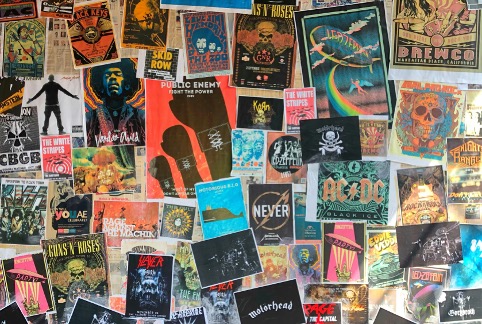 Famous brands don’t just sell things
Famous brands see the world in a particular way. Oatly’s packaging reads like a milky manifesto. Patagonia’s “Don’t Buy This Jacket” ad was a worldview, not a campaign. Yorkshire Tea is great at being, well, from Yorkshire. A brand without a perspective is a brand no one will remember.
Having been part of the founding team behind giffgaff, and the Marketing Director who helped establish Beavertown Brewery as a brand that transcends craft beer - my dream was always to find the brand I worked on in the lyrics of a song. It happened on a Stormzy track (true story). That moment felt like a signal and a measure of the cumulative effect of everything we’d built. It went beyond pushing product, it transcended into something no longer owned by the brand, but owned by the people.
Watching Have I Got News For You the other Friday, the KFC Pickle Puffer got a mention. You can’t buy those moments.
Loka, a start-up, did $1m in pre-orders in a week and chose to build a culture and community brand anyway.
Fame doesn’t live in advertising. It lives in conversations in coffee shops, in subcultures, in the moments that matter to them. Famous brands find a moment in culture that shares their values and beliefs. They don’t just sponsor the moment, they belong to it. And to belong to it, two things matter. You add value, and you are authentic.
Beware of Vampires
The default brand behaviour in a subculture is extraction. Find something with energy and credibility, borrow it, scale it, and try to suck the blood out of its meaning. We’ve seen it happen to Grime, to Sustainability, to Pride, to Cottagecore, to Korean culture itself. The brand shows up, takes what it needs, and leaves again.
Audiences see behind the curtain. So authenticity isn’t optional, it’s the ticket to ride. You need the right to play. Otherwise you’re just buying and pushing, and people won’t believe you even if the celebrity is holding your product.
Have a Distinct Point of View
Famous brands know what they believe. They tell their story in a way only they can. A story that is genuinely, specifically, unmistakably them.
But a point of view only has power if it’s shared, not broadcast. The brands that earn cultural fame aren’t standing at a podium, they’re in the room. Participating, listening, adding something real.
The 12-year-old me figured out that people don’t listen and follow for the sake of it. They follow belief. They follow feeling. And both create fandom.
Maybe the better question isn’t how to get famous. It’s famous for what? Famous to whom? And are we brave enough to mean it today and tomorrow?
If everything exists to end in a photograph, the question is whether your brand is in the frame.
Tom will be writing for MAD//Insight throughout the year.